
Auction 108 Books | Letters and Manuscripts | Scrolls and Jewish Ceremonial Art
May 12, 2026
- and (201) Apply and filter
- manuscript (94) Apply manuscript filter
- print (79) Apply print filter
- book (60) Apply book filter
- earli (53) Apply earli filter
- letter (47) Apply letter filter
- 17 (46) Apply 17 filter
- centuri (46) Apply centuri filter
- th (46) Apply th filter
- jewri (39) Apply jewri filter
- 17th (38) Apply 17th filter
- europ (33) Apply europ filter
- rabbi (33) Apply rabbi filter
- the (33) Apply the filter
- esther (30) Apply esther filter
- on (30) Apply on filter
- parchment (30) Apply parchment filter
- scroll (30) Apply scroll filter
- 18 (27) Apply 18 filter
- eretz (27) Apply eretz filter
- israel (27) Apply israel filter
- various (26) Apply various filter
- jerusalem (24) Apply jerusalem filter
- dutch (22) Apply dutch filter
- french (22) Apply french filter
- work (22) Apply work filter
- document (21) Apply document filter
- haggadot (20) Apply haggadot filter
- passov (20) Apply passov filter
- 16 (19) Apply 16 filter
- 16th (19) Apply 16th filter
- 18th (19) Apply 18th filter
- europe, (18) Apply europe, filter
- lithuania (18) Apply lithuania filter
- of (18) Apply of filter
- state (18) Apply state filter
- unit (18) Apply unit filter
- crown (16) Apply crown filter
- crowns, (16) Apply crowns, filter
- finial (16) Apply finial filter
- finials, (16) Apply finials, filter
- in (16) Apply in filter
- more (16) Apply more filter
- ornament (16) Apply ornament filter
- shield (16) Apply shield filter
- torah (16) Apply torah filter
- bibl (15) Apply bibl filter
- central (15) Apply central filter
- countri (15) Apply countri filter
- hebrew (15) Apply hebrew filter
Displaying 73 - 84 of 277


Auction 108 Books | Letters and Manuscripts | Scrolls and Jewish Ceremonial Art
May 12, 2026
Opening: $300
Sold for: $400
Including buyer's premium
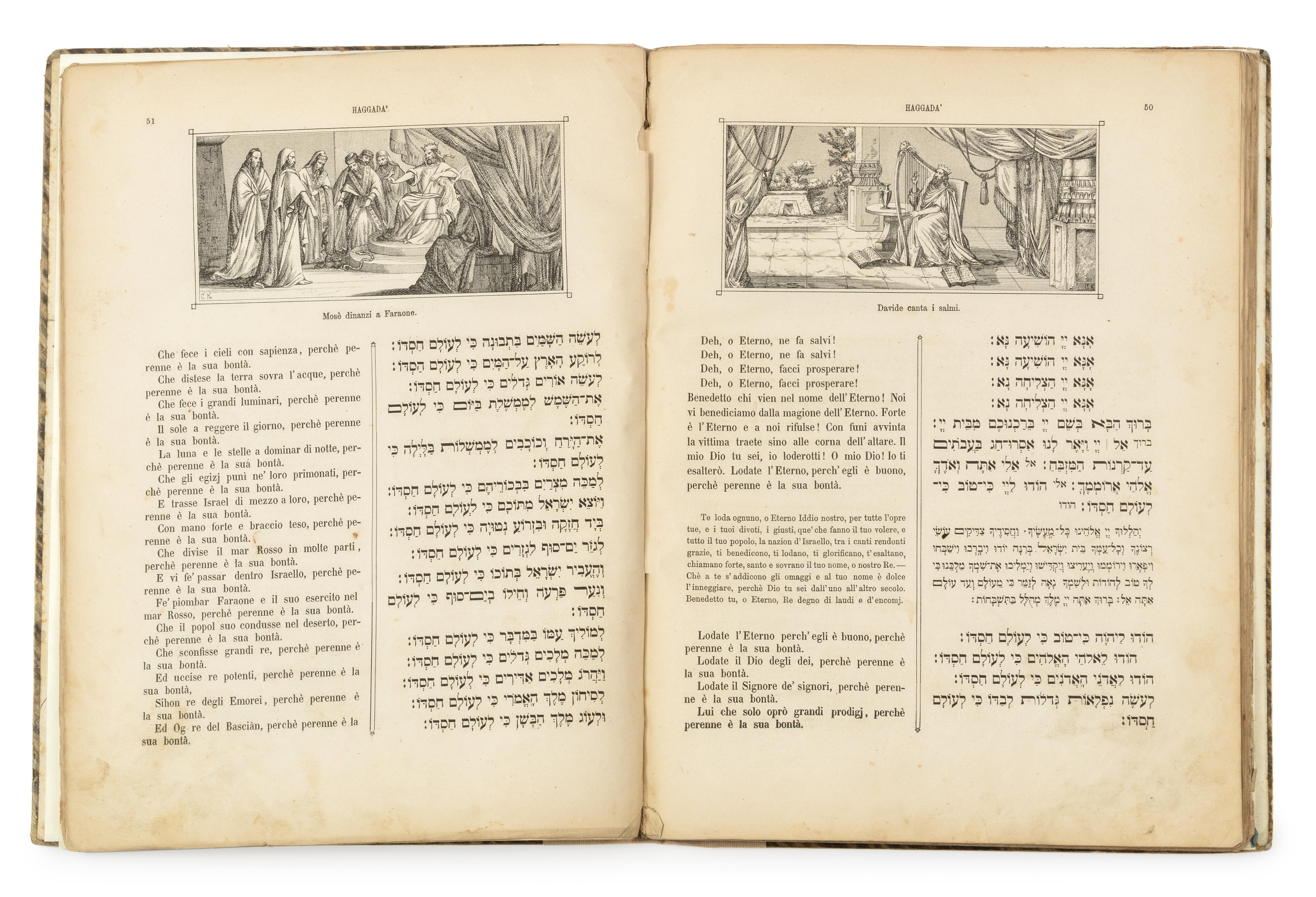
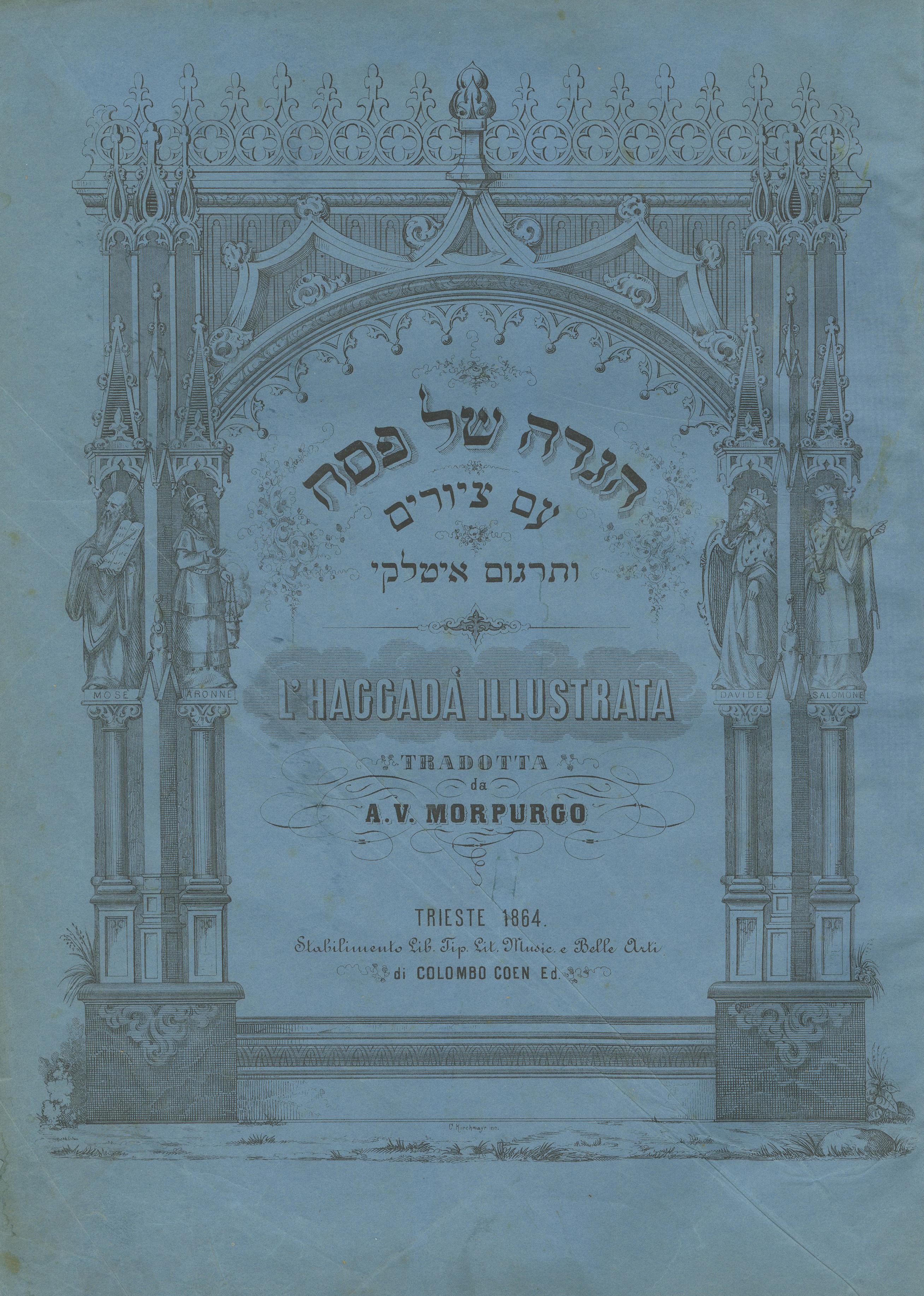
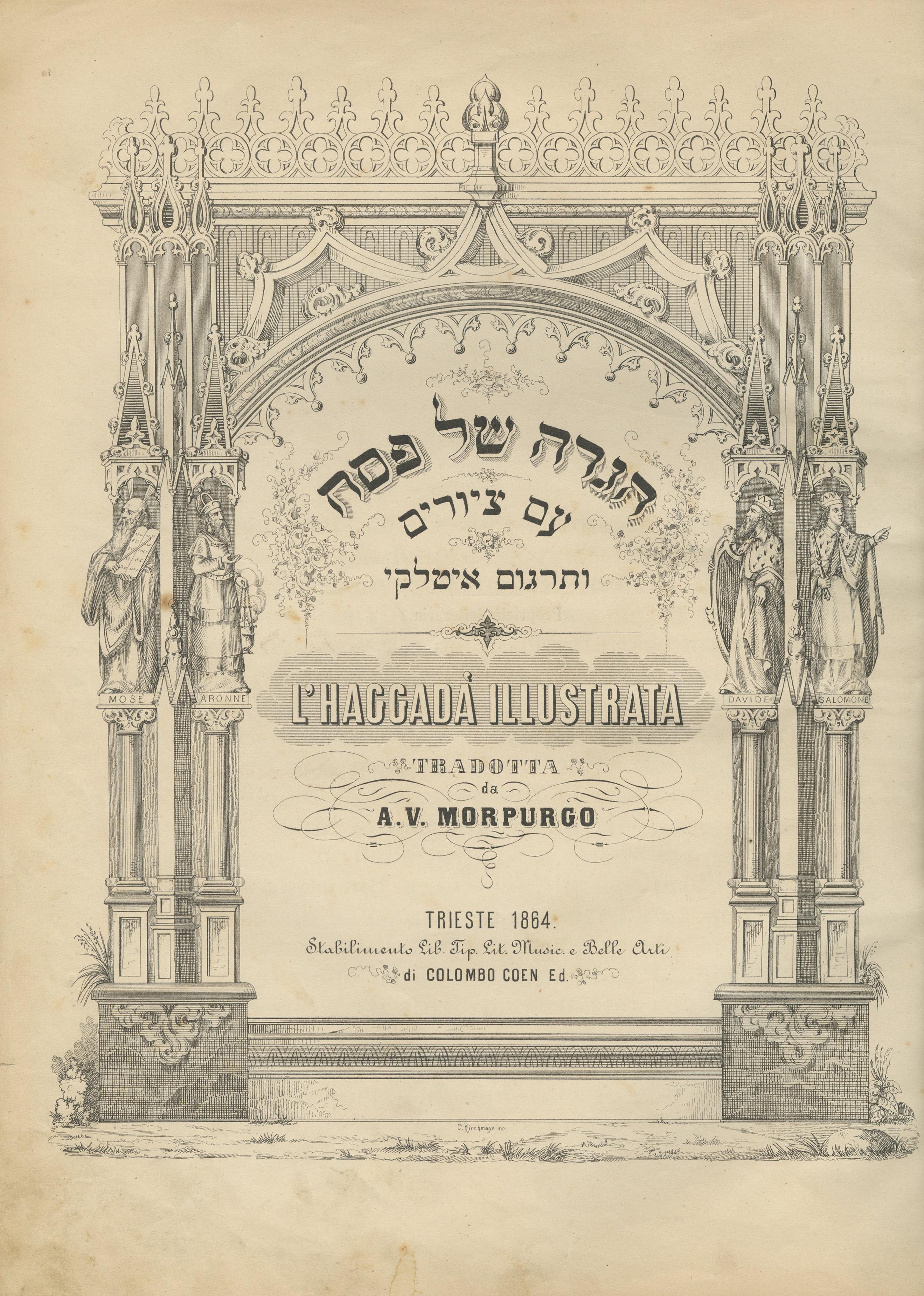
Passover Haggadah, with Italian translation and illustrations. Trieste: Colombo Coen, 1864. The Haggadah ends with musical notes for the songs Adir Hu, Adir BiMeluchah and Echad Mi Yodea.
Hebrew and Italian on facing columns.
This Haggadah was edited by Avraham Chai Morpurgo. It is illustrated with 58 engravings by C. Kirchmayr, with captions below each illustration.
[5], 64, [2] pages. Front wrapper only, colored blue. Approx. 33 cm. Fair condition. Many stains, including dark food and wine stains. Wear. Marginal tears and open tears to some leaves, slightly affecting text of one leaf. New binding.
Otzar HaHaggadot 1217.
Category
Passover Haggadot
Catalogue Value


Auction 108 Books | Letters and Manuscripts | Scrolls and Jewish Ceremonial Art
May 12, 2026
Opening: $1,000
Sold for: $6,875
Including buyer's premium
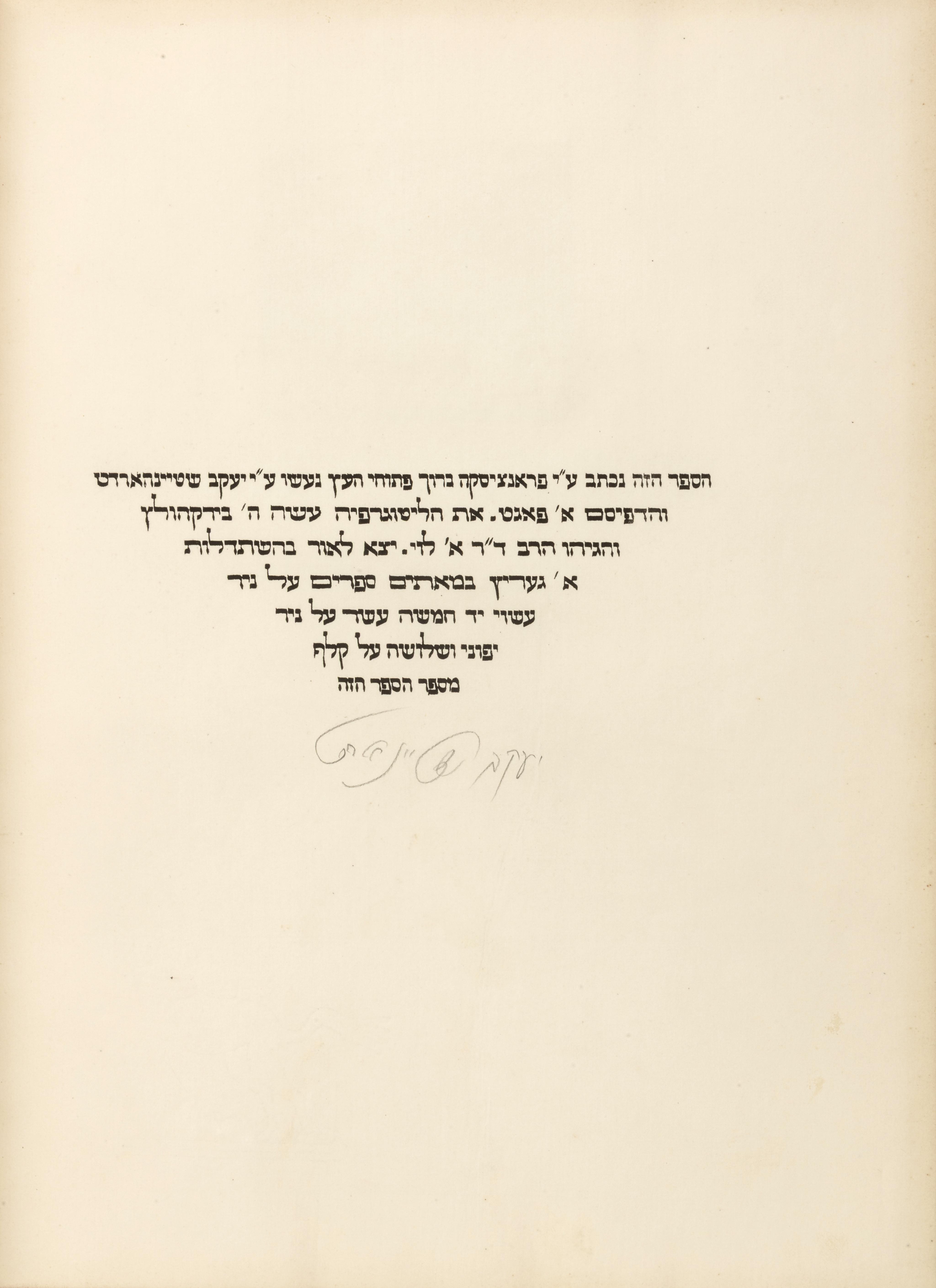
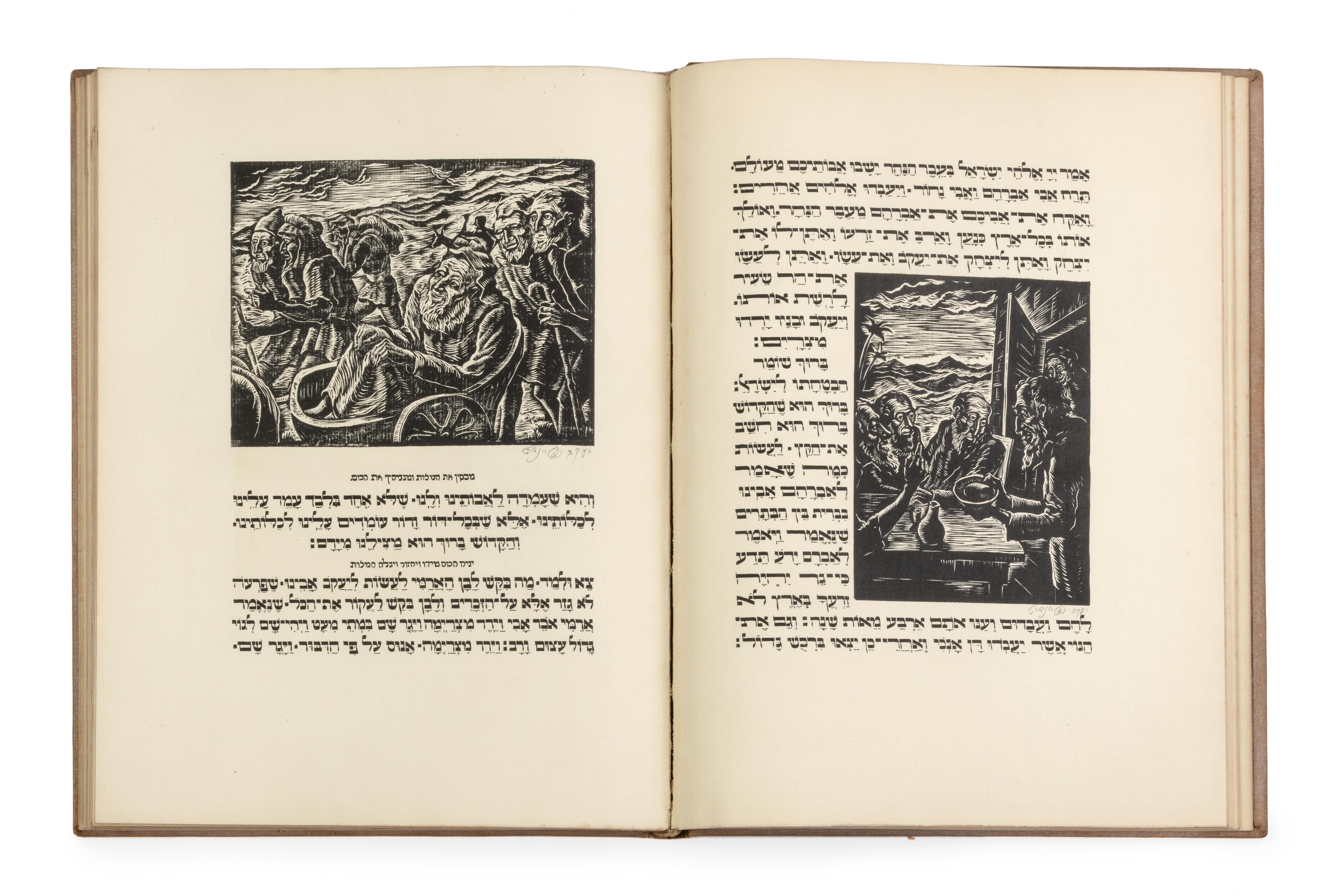
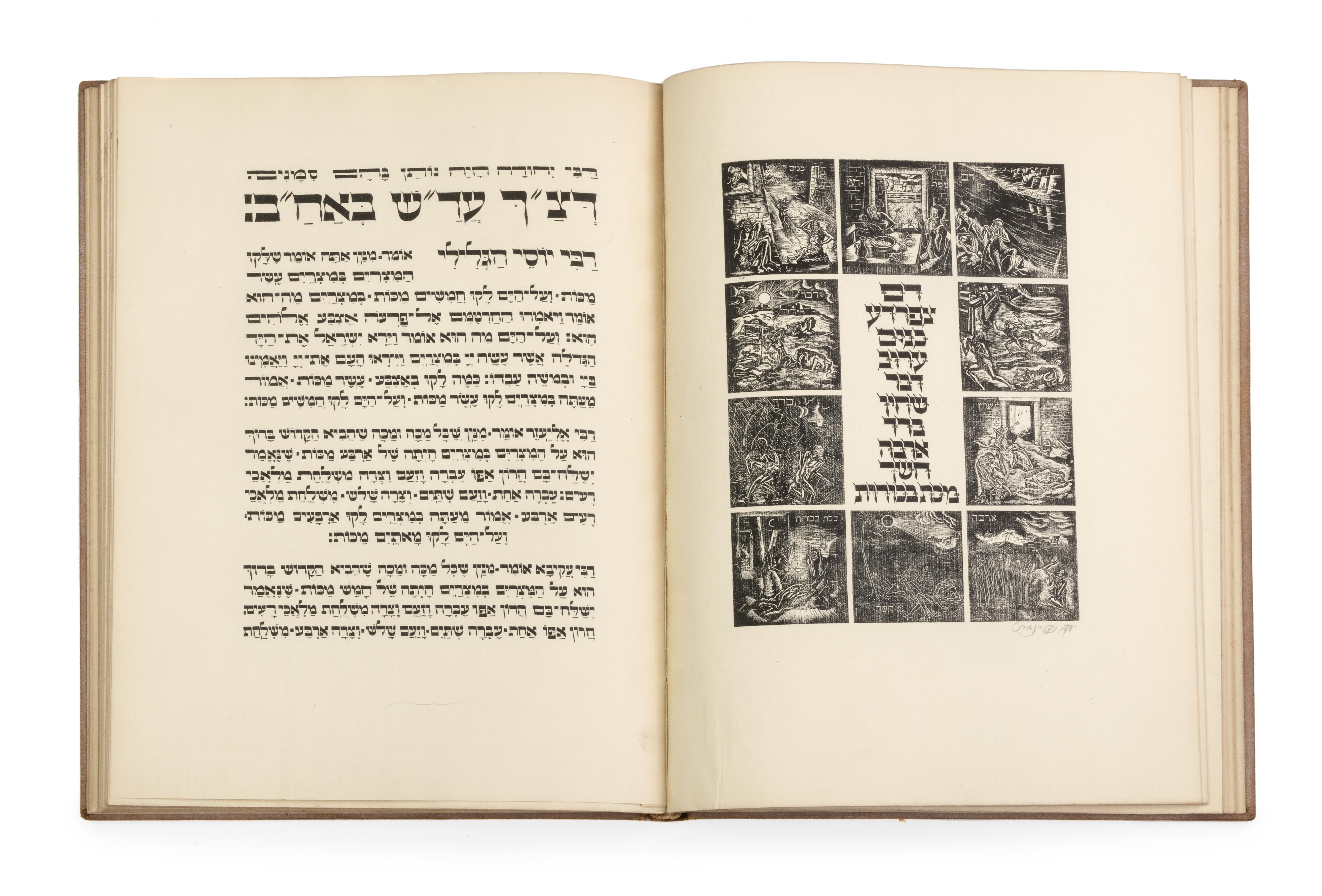
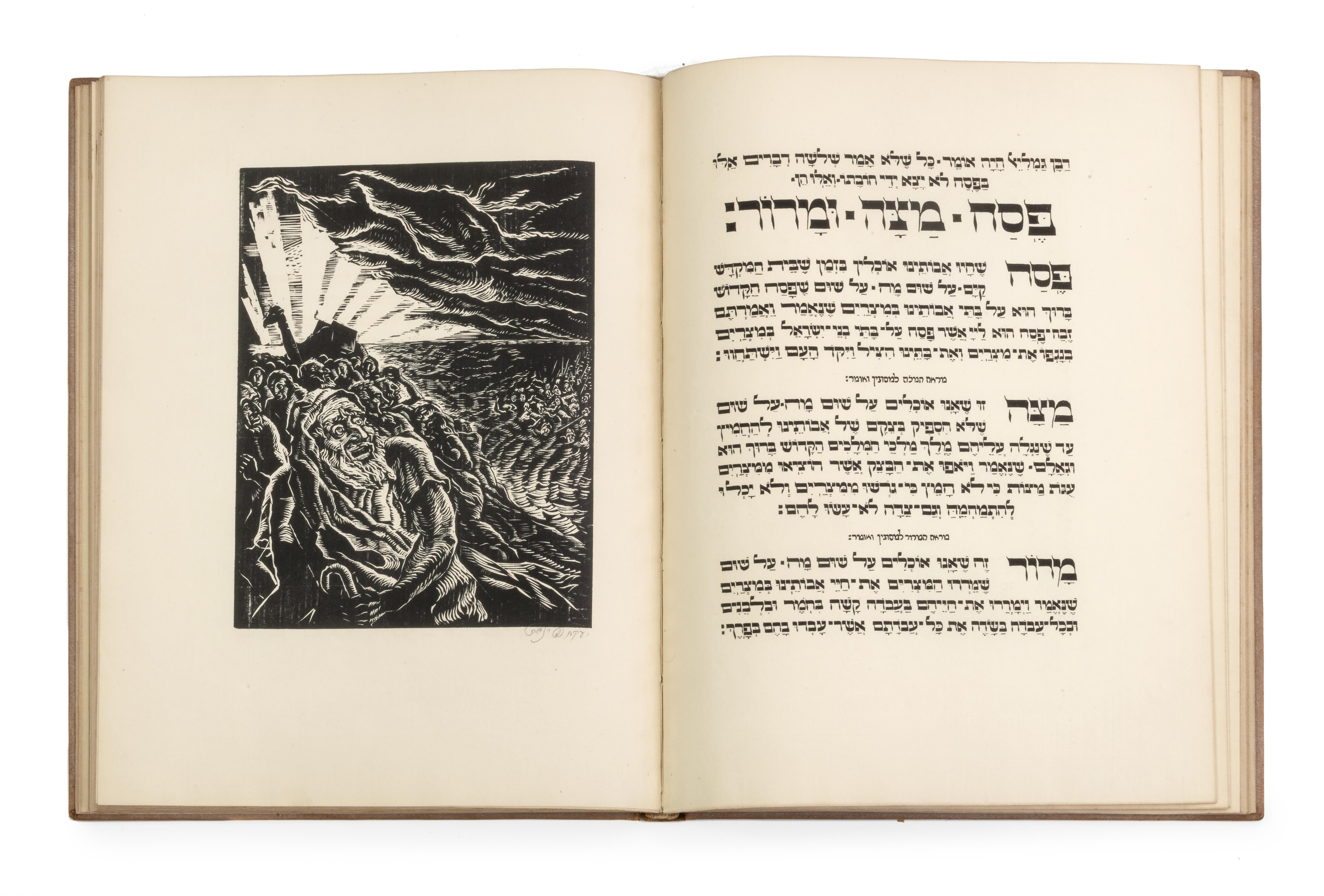
Passover Haggadah, illustrated by Jacob Steinhardt. [Berlin: Erich Goeritz ("lithographs by H. Birkholz"), 1921].
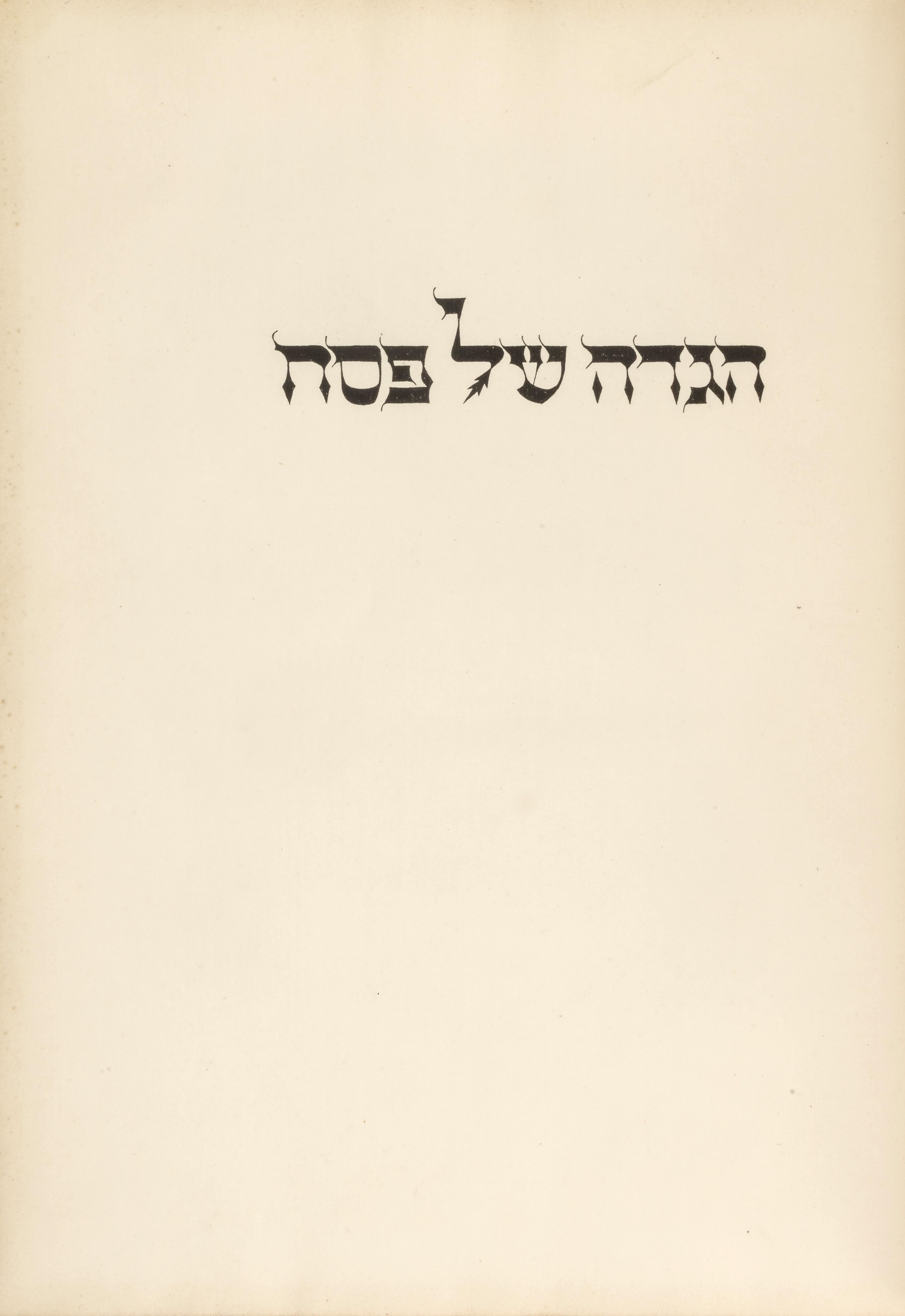
Elegant Haggadah, written in calligraphic letters designed by Franzisca Baruch, and accompanied by twenty woodcuts by Jacob Steinhardt – all signed by the artist. The colophon leaf is also signed by Steinhardt.
Rare copy of the original edition, printed in Berlin in 1921 in 218 copies (including 15 copies printed on high-quality Japanese paper and 3 on parchment; the present copy is unnumbered, but is one of the 200 copies printed on paper).
The Stam Typeface of the Steinhardt Haggadah
In 1918, Jacob Steinhardt approached Franzisca Baruch (1901-1989), graphic designer, and requested her assistance in designing a bibliophile edition of the Passover Haggadah. Baruch, then a seventeen-year-old student in the Berlin Art Academy and totally unacquainted with Hebrew characters, examined early manuscripts and printed books in the Berlin Royal Library (presently the State library) and gradually taught herself the Hebrew alphabet (her studies and drafts are documented in a sketch book, held today in the Israel Museum). She chose to print the Haggadah in a new type she herself designed, inspired by the Prague Haggadah – the first printed illustrated Haggadah. The font she designed for the Haggadah was so beautiful that it was cast in lead and became a new Hebrew print font – the Stam type.
[48] pages. Printed on one side of uncut double leaves. 38 cm. Top edges gilt. Good condition. Light stains. High-quality leather binding, with inscribed decorations (signed: "Heyne-Ballmüller"). Defects to binding (part of top of spine missing, with marginal tears).
Provenance: Mozes Heiman Gans.
Reference:
1. Otzar HaHaggadot 2813.
2. Yosef Hayim Yerushalmi, Haggadah and History, Philadelphia: Jewish Publication Society of America, 1975, plates 134-136.
Category
Passover Haggadot
Catalogue Value


Auction 108 Books | Letters and Manuscripts | Scrolls and Jewish Ceremonial Art
May 12, 2026
Opening: $1,000
Sold for: $4,750
Including buyer's premium
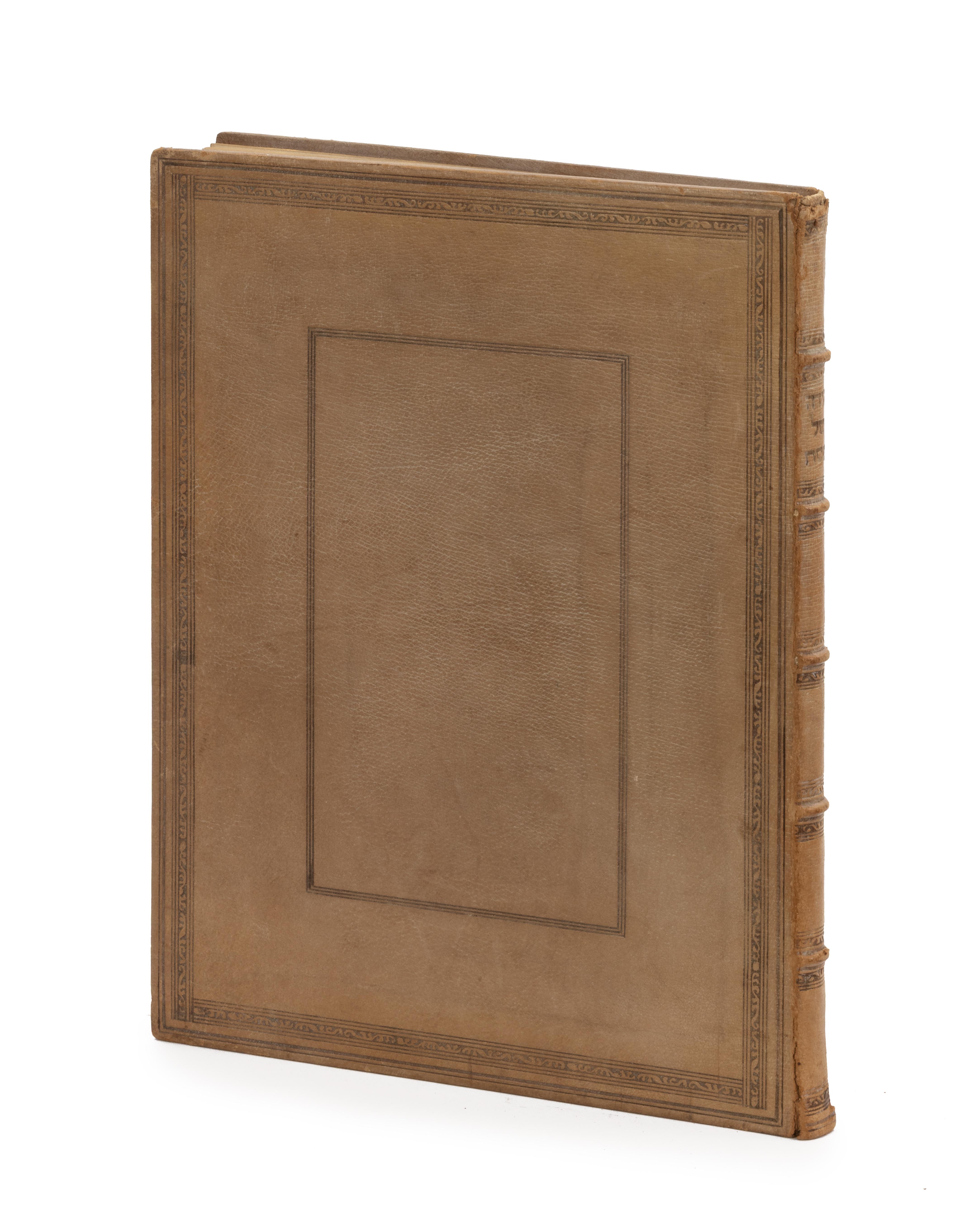
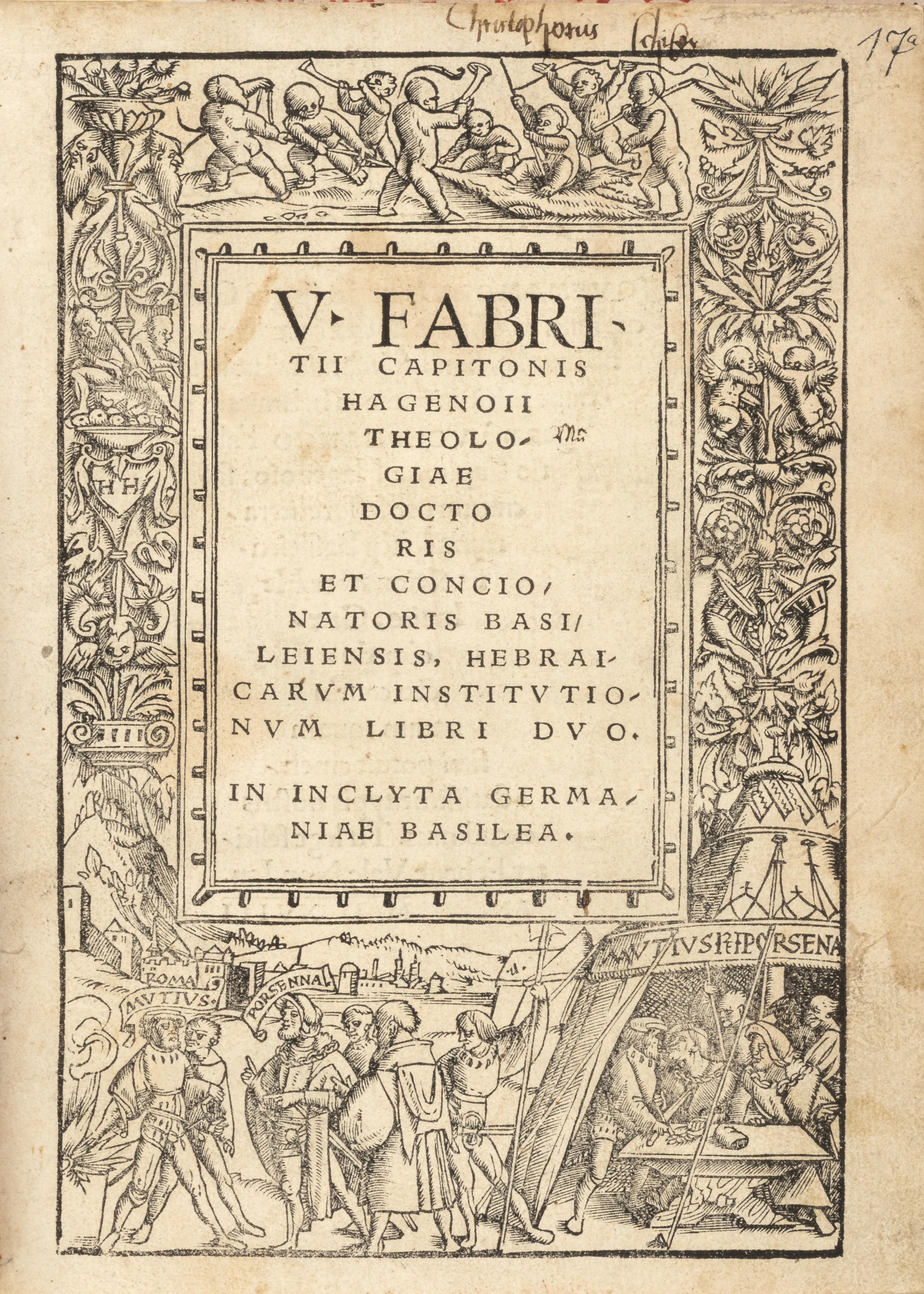
Hebraicarum Institutionum Libri Duo, fundamentals of the Hebrew language in two books, by Wolfgang Fabricius Capito. Basel: Johann Froben, 1518 (printing details in colophon). First edition. Latin and Hebrew.
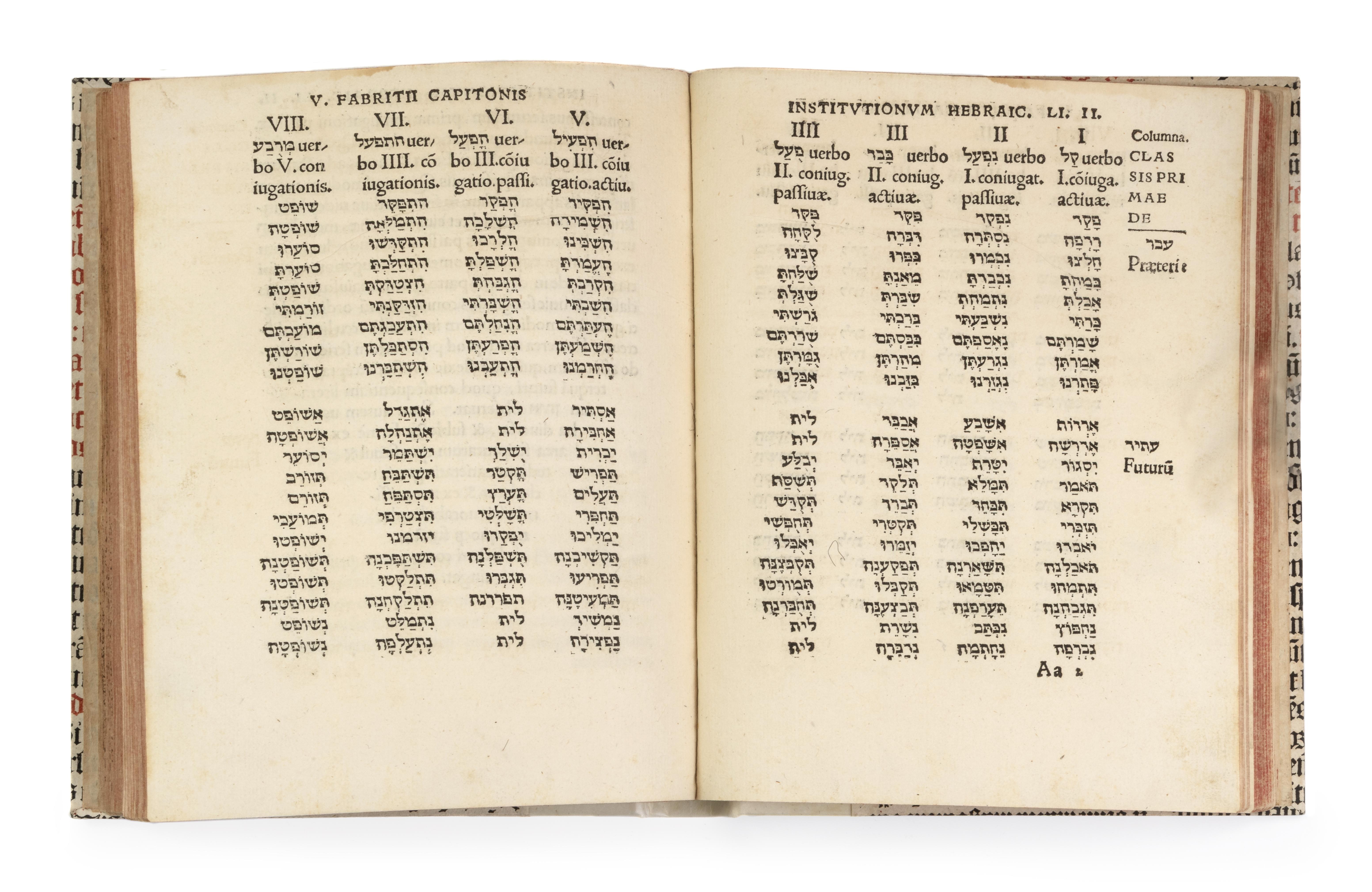
Hebrew grammar by Hebraist and reformer Wolfgang Fabricius Capito, in cooperation with Protestant theologian Konrad Pellikan. Two parts: phonology, roots and abbreviations; and noun and verb morphology, with declension charts.
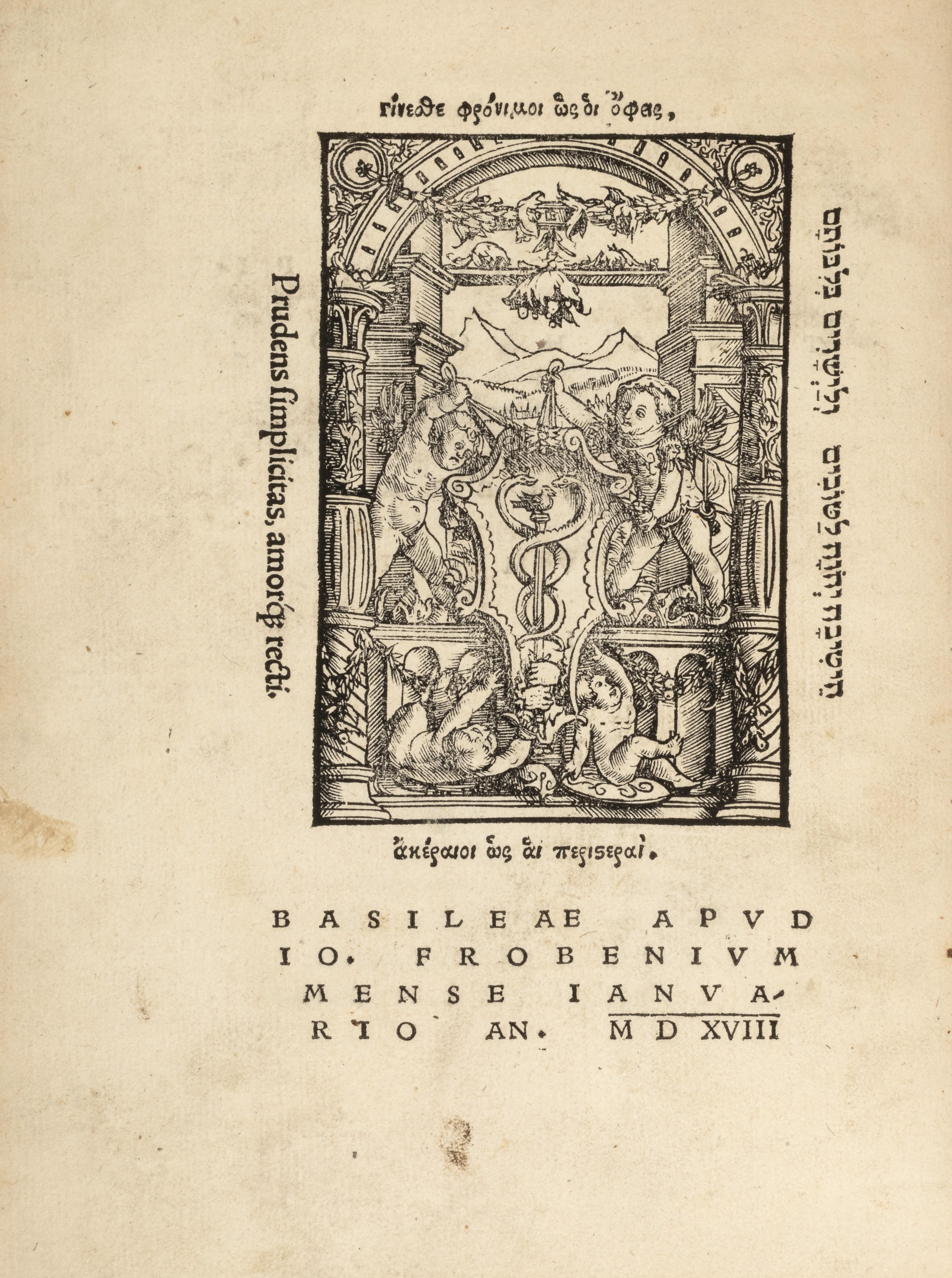
Decorated title page with woodcut frame by artist Hans Holbein the Younger. The bottom depicts Gaius Mucius Scaevola demonstrating his courage to King Porsena. Printer's device on last page; decorated initial panels (woodcuts).
Many glosses and inscriptions in early handwriting to first thirty leaves of book (most in German); early owner's signatures on title page.
The author, Wolfgang Fabricius Capito (1478-1541), was a German theologian and mystic, and an early Protestant reformer in Basel and Strasbourg. He taught philosophy at the University of Basel, and was a humanist with ties to Erasmus. Capito was known for his defense of the Jews, and had a close relationship with advocate R. Yosef of Rosheim, and in 1547 he even provided him with a letter of recommendation for Martin Luther to enable him to stop the expulsion of the Jews from Saxony.
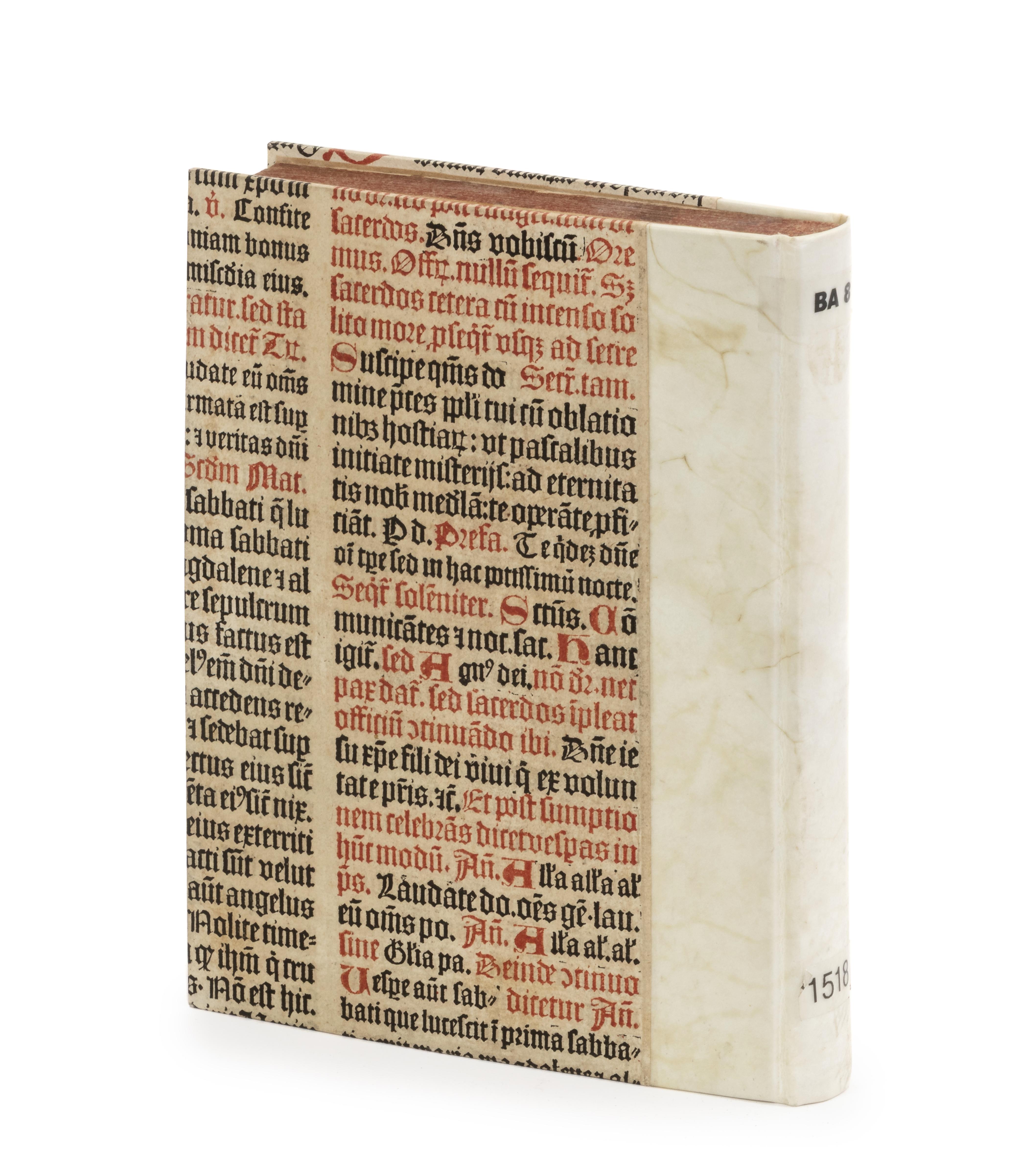
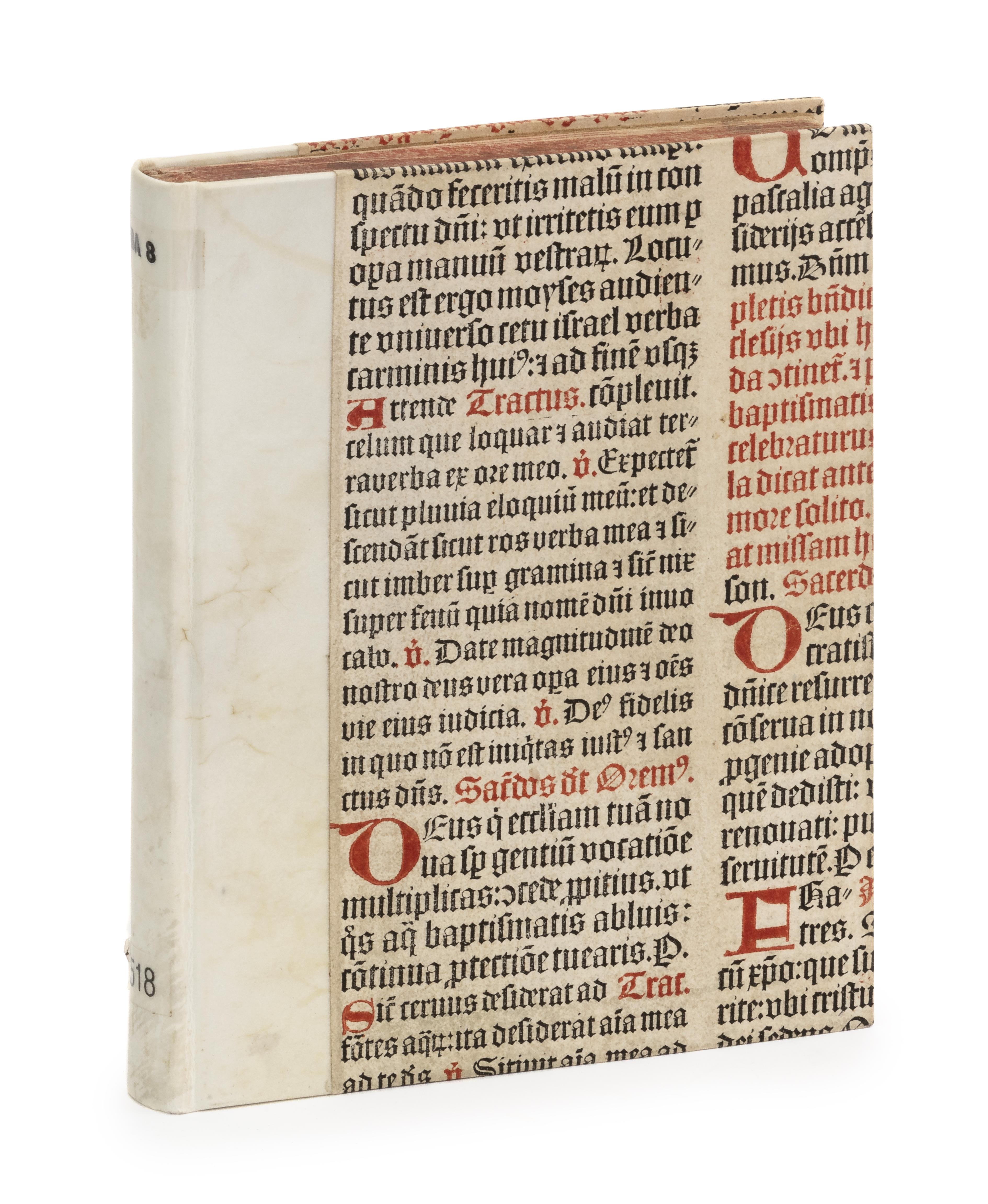
[58 leaves; 72 leaves (=130 leaves)], fine copy with wide margins. Approx. 20 cm. Good condition. Minor stains. New binding (covered with leaf from a Christian prayer book, ca. 16th century, printed in black and red); with new parchment binding.
Category
Early Printed Books – 16th and 17th Centuries
Catalogue Value


Auction 108 Books | Letters and Manuscripts | Scrolls and Jewish Ceremonial Art
May 12, 2026
Opening: $1,000
Sold for: $3,000
Including buyer's premium
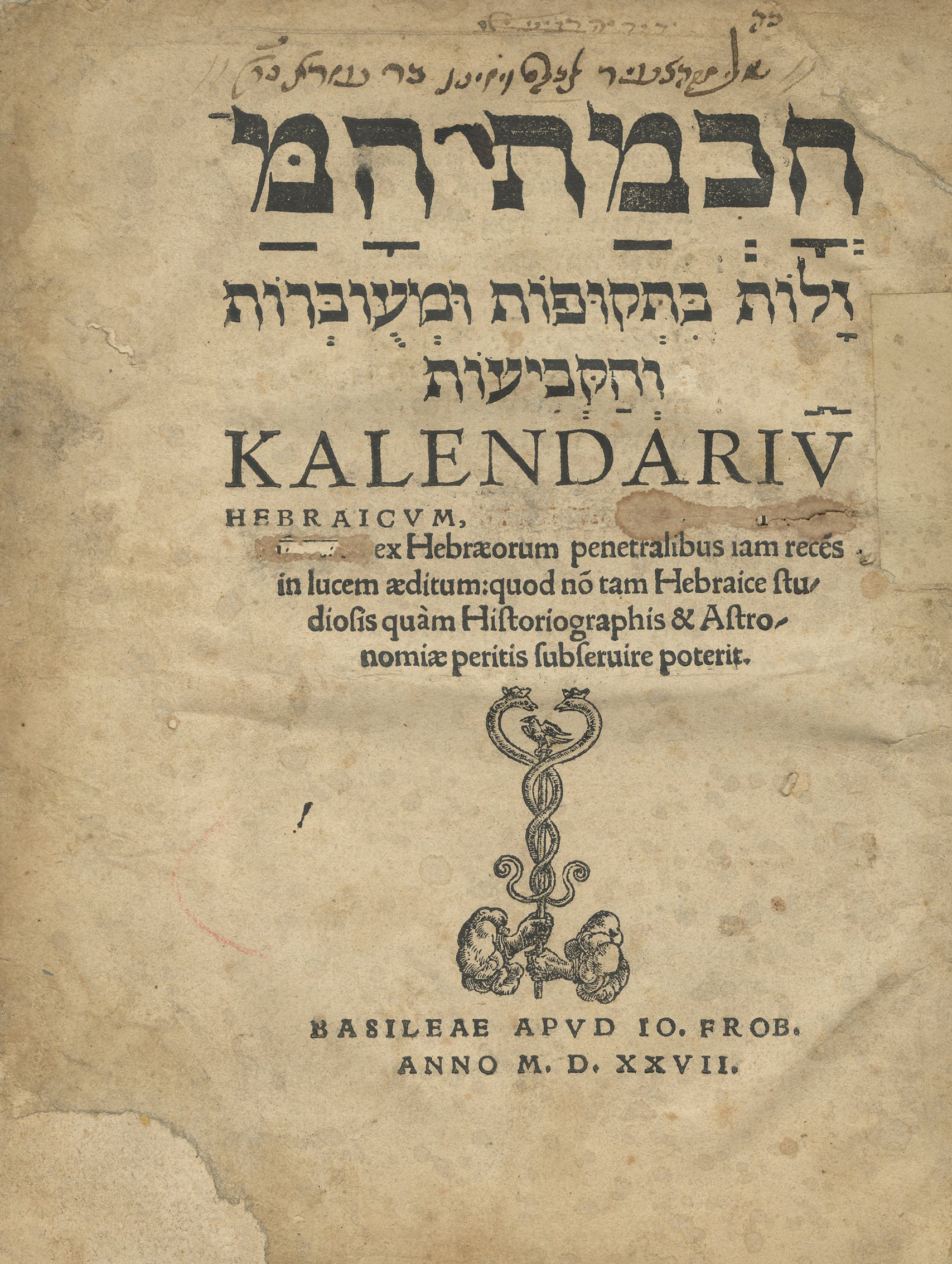
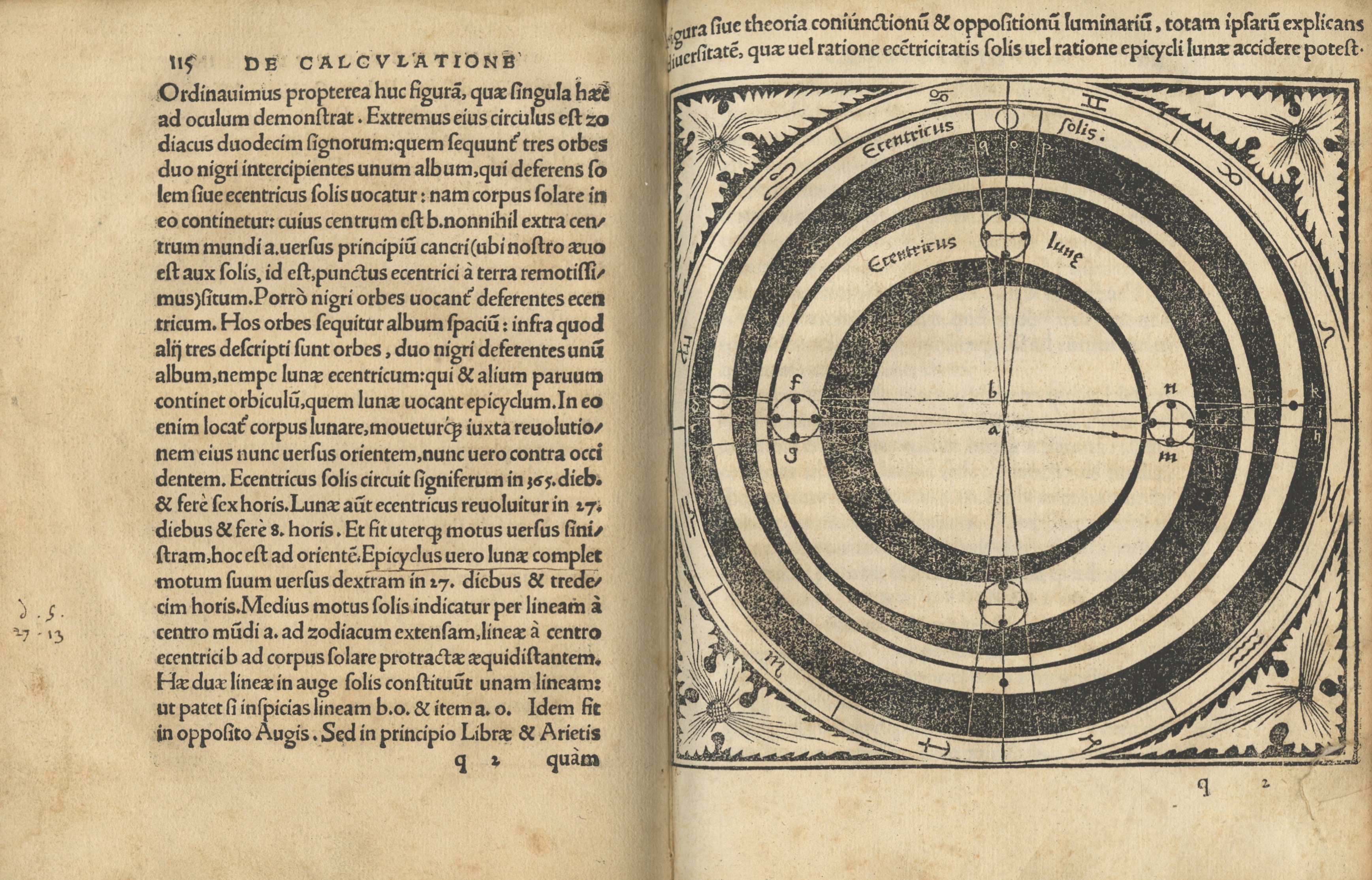
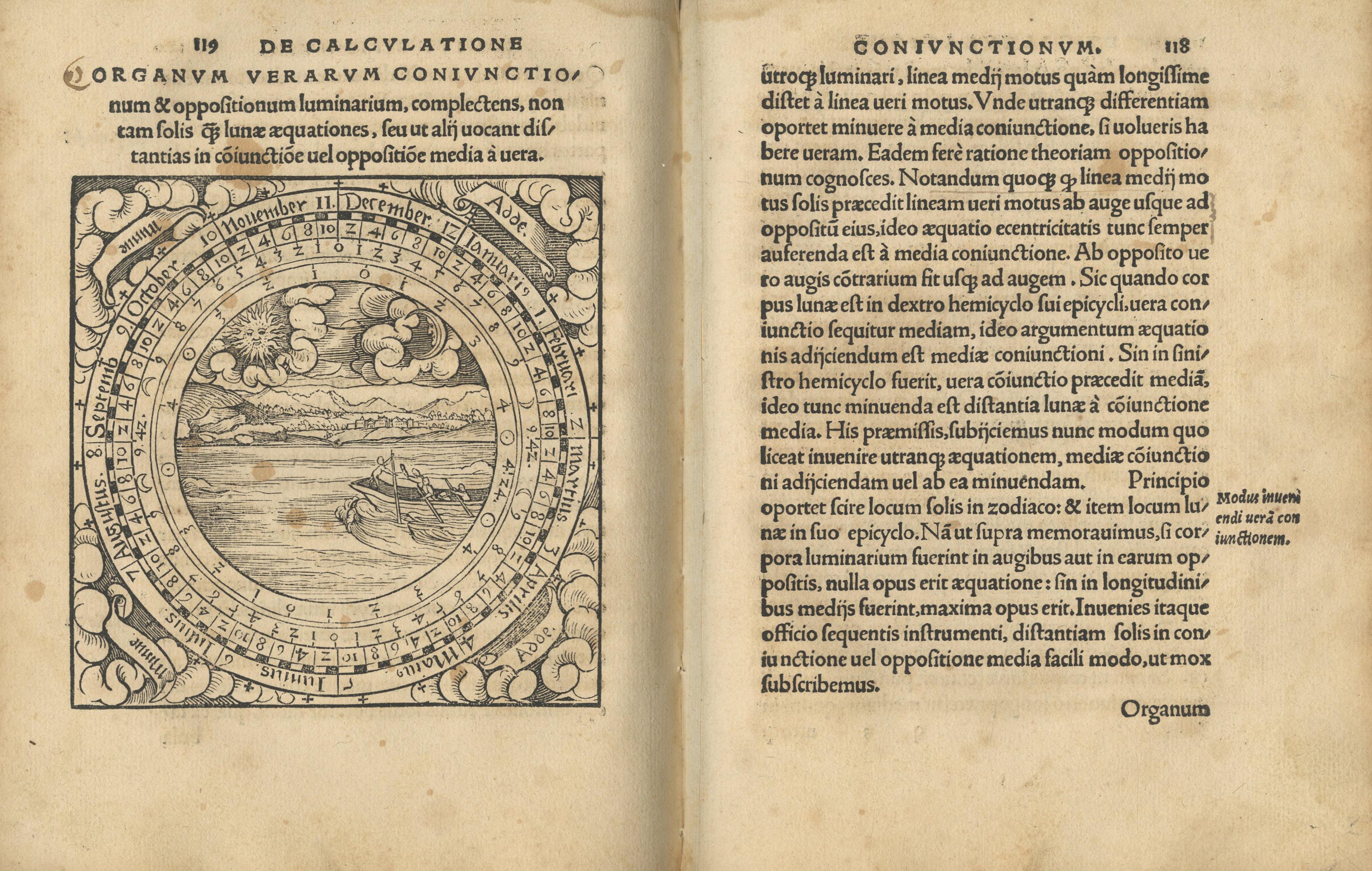
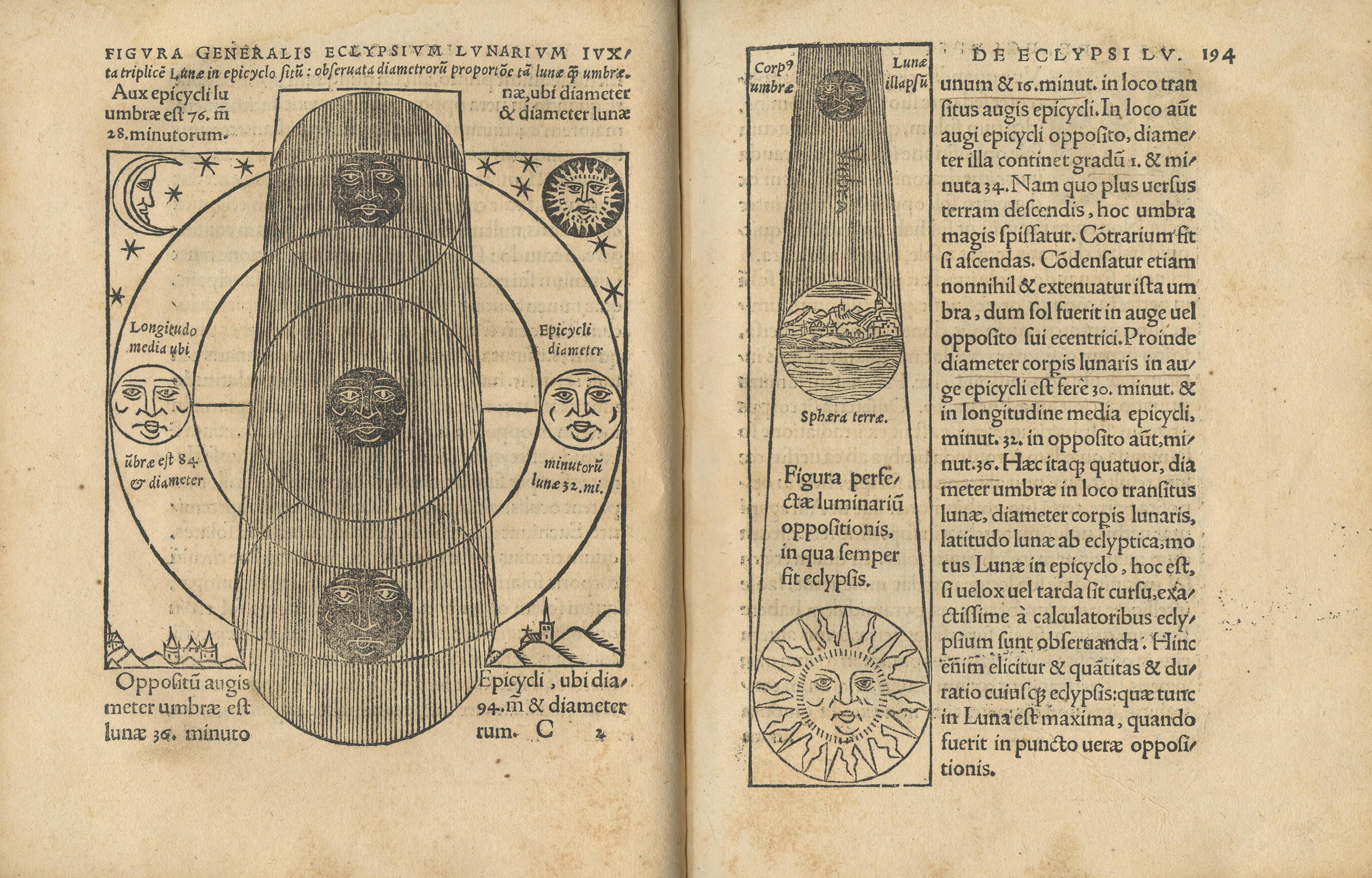
Chochmat HaMazalot, Kalendariu Hebraicum, edited by Sebastian Münster. Basel: Johann Froben, 1527. Hebrew and Latin. First edition.
Anthology of works and various passages on the subject of the Hebrew calendar, partially translated into Latin. Includes selections from Seder Olam Zuta, Sefer HaKabbalah by R. Avraham son of R. David HaLevi and other works.
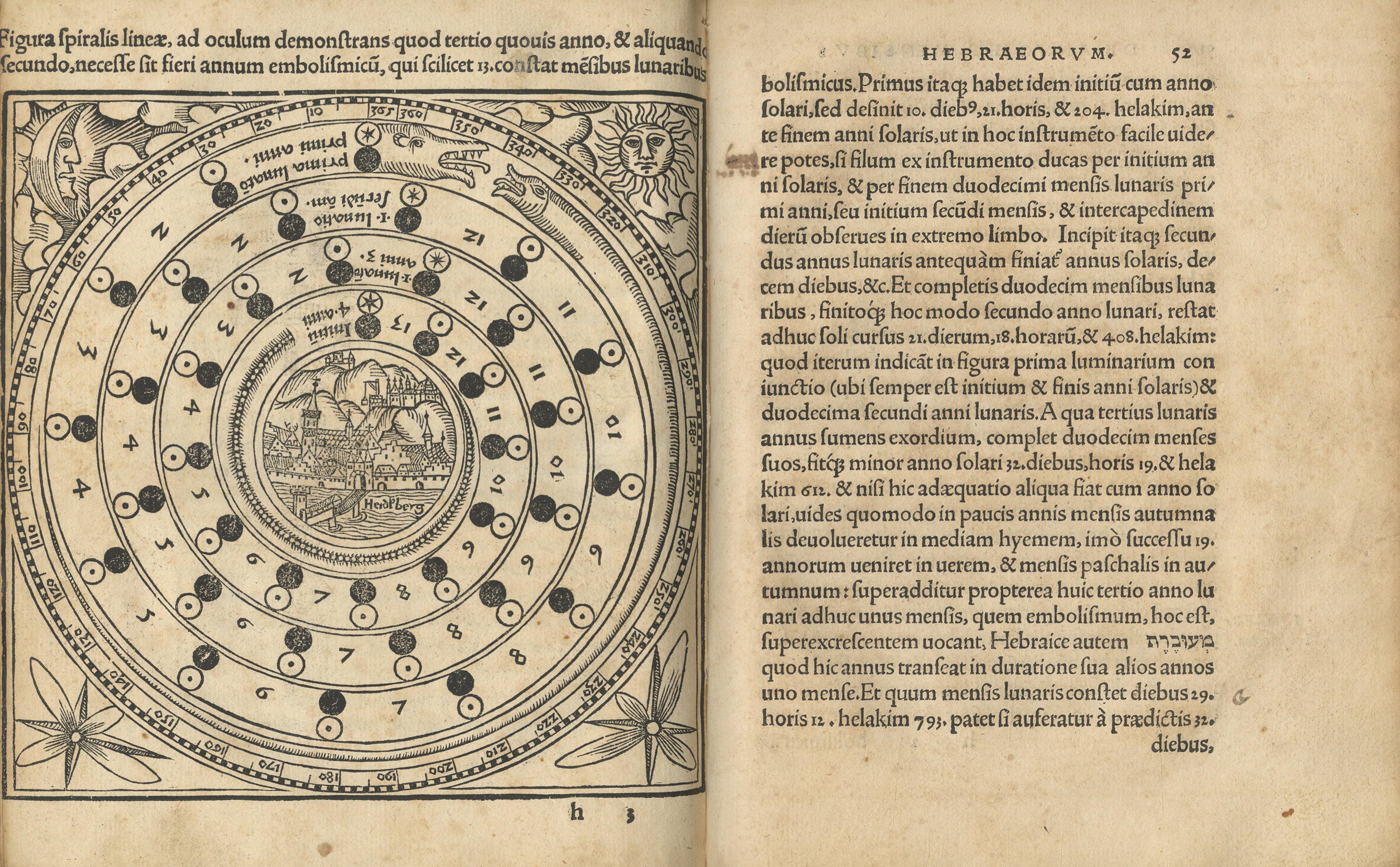
Many fine woodcut initial panels. Two leaves with large astronomical illustrations (one of the illustrations features Münster's town Heidelberg at the center). Various additional charts and illustrations.
Printer's device of Johann Froben on title page and last leaf.
On title page, ownership inscription in Sephardic script: "Belongs to me, Avraham Vecinho son of Azriel". This may be the signature of R. Avraham Vecinho, who signed a letter of R. Moshe ibn Machir along with R. Yitzchak Gershon in Venice, 1600. His father (mentioned here with a blessing for the living) may be R. Ezra son of R. Yosef Vecinho. He and his father were astronomers (the topic of the present book). His father, R. Yosef (José) Vecinho, served as physician to King John III in Lisbon, and was an acquaintance and advisor of the explorer Christopher Columbus.
Another ownership inscription on title page (in Italian script, somewhat faded).
Glosses and inscriptions in Latin in several places, and notations within text to some leaves.
On title page and several other places, names of Sebastian Münster are deleted with ink or scraping, sometimes resulting in open tears as a result of ink erosion.
[7], 200, [16] pages, [2] plate leaves (plates are usually partially folded, but in the present copy, these leaves are bound so as to obviate the need for folding). Approx. 20 cm. Fair-good condition. Stains, including dampstains. Tears, including open tears to title page and other leaves, affecting text in several places, partially repaired with paper. Worming. New parchment binding.
Bookplate of Mozes Heiman Gans.
Category
Early Printed Books – 16th and 17th Centuries
Catalogue Value


Auction 108 Books | Letters and Manuscripts | Scrolls and Jewish Ceremonial Art
May 12, 2026
Opening: $800
Sold for: $3,750
Including buyer's premium
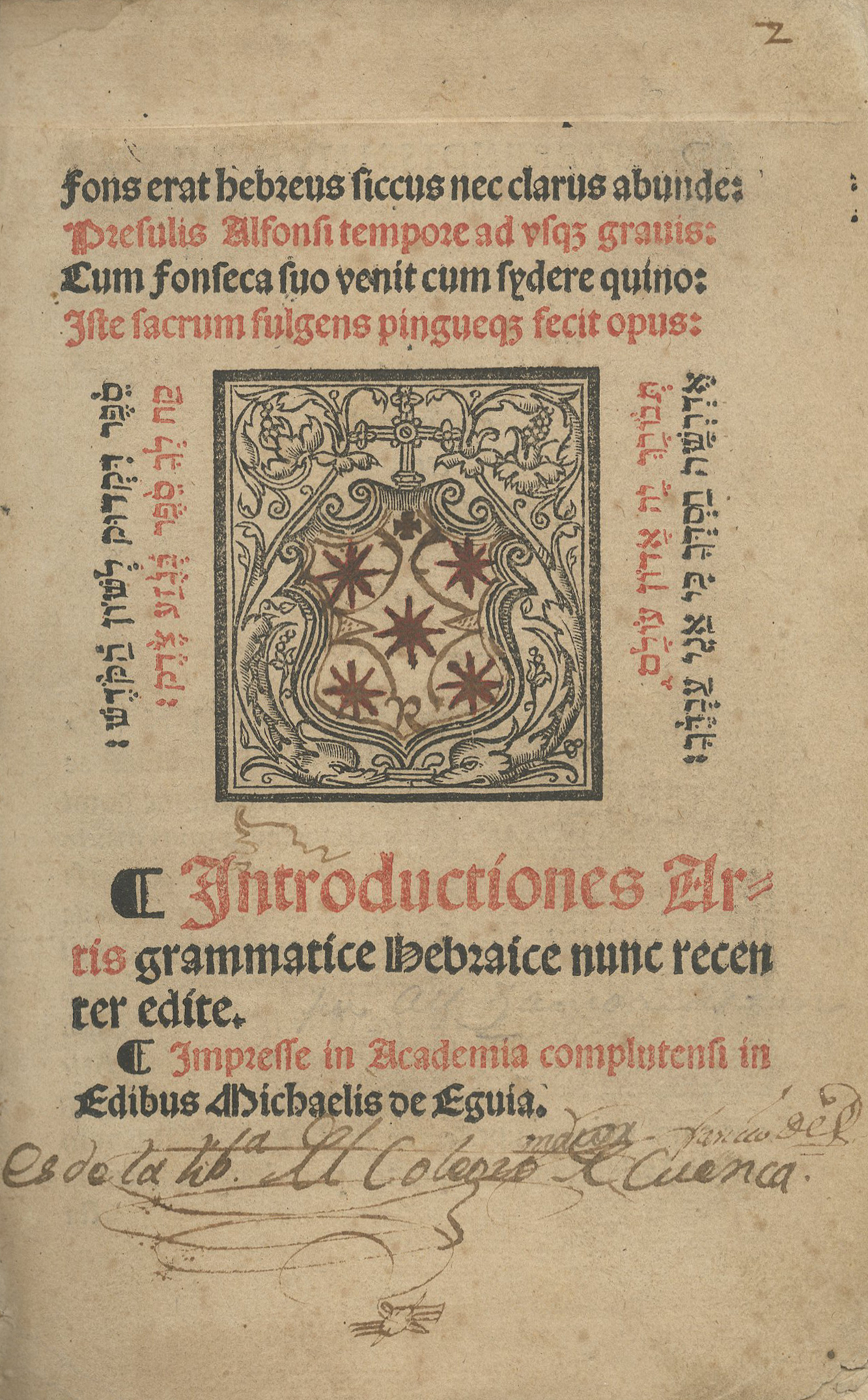
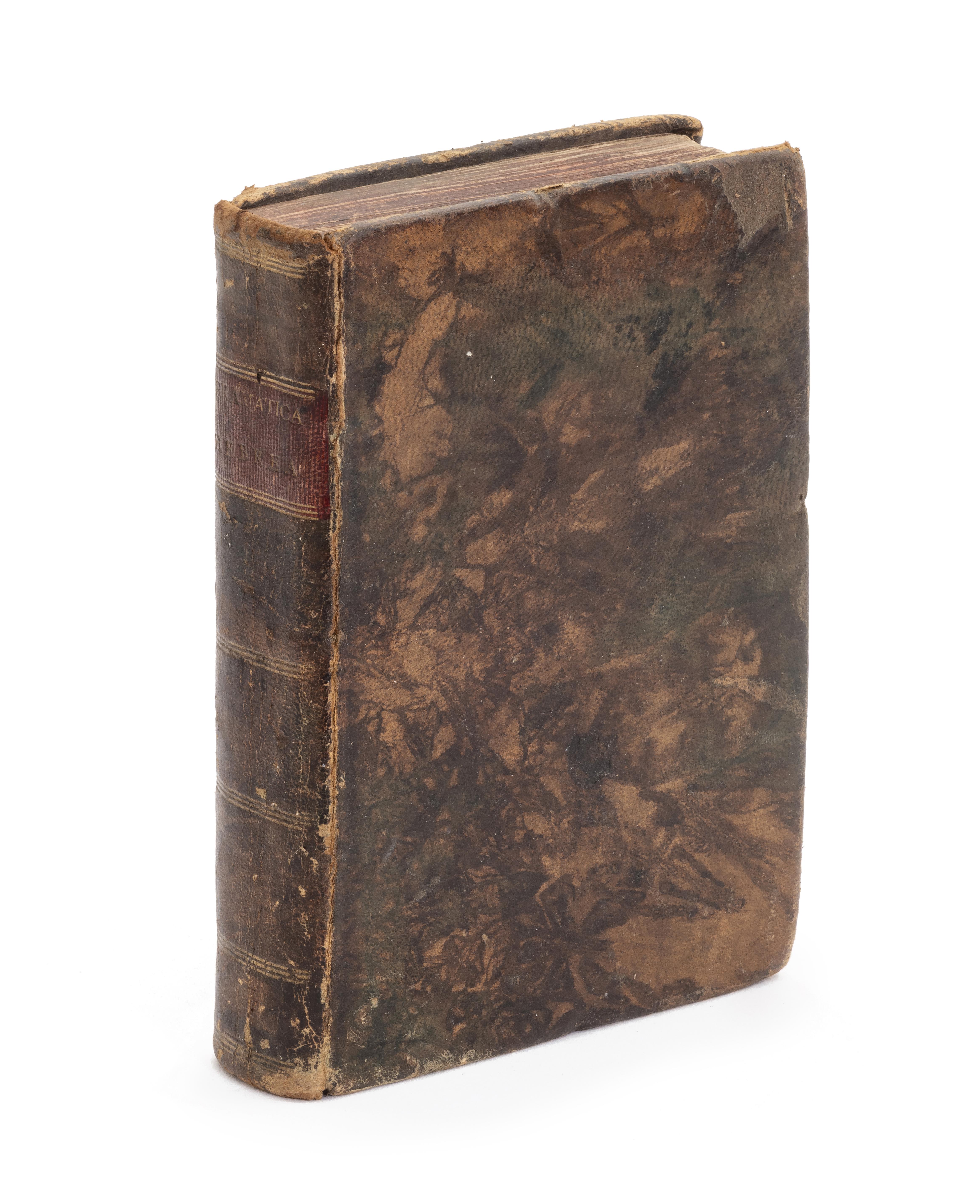
Introductiones Artis Grammatice Hebraice [Introduction to the Art of Hebrew Grammar], by Alfonso de Zamora. Alcalá de Henares (Spain): Michaelis de Eguia, 1526. Latin and Hebrew.
Hebrew grammar, one of the most important and influential grammars published in Renaissance-era Europe.
An abridged edition of this work was earlier printed in 1515 as part of the Complutensian Polyglot – the first multilingual Bible, considered one of the most impressive achievements of early printing. The present edition, published in 1526, is the first complete and standalone edition of the work. It was printed by the same printer in the same type as the Polyglot, but with a lengthy section not included in the abridged edition: the author's epistle to the Jews of Rome. The epistle, written in Hebrew (with a Latin interlinear translation) persuades the Jews of Rome of the truth of Christianity and encourages them to convert.
The present book is considered one of the most beautiful exemplars of early printed Hebrew typography. Semitic philologist Dr. Joshua Bloch declared that "virtually nothing like their beauty is to be met in the types of fifteenth-century printing".
Title page in red and black, with Hebrew text across width of leaf. Coat of arms of Archbishop of Toledo, Alonso de Fonseca, patron of the author – five red stars in a shield decorated with flowers and dragons (in this copy, the stars are painted red). Text decorated with illustrated initial panels (woodcuts).
The book’s author, Alfonso de Zamora (ca. 1480-1558), a Jewish converso and scholar of Spanish origin. He was the editor of the Hebrew and Aramaic sections of the Complutensian Polyglot, the world’s first multilingual Bible. Work on this edition began just a few years after the Expulsion of the Jews from Spain, at the behest of the Grand Inquisitor, Cardinal Francisco Jiménez de Cisneros (1436-1517). Since most of the Christians of Spain acquainted with Hebrew were in fact converts from Judaism, the job of writing and editing the Hebrew section was entrusted to three learned Jewish converts to Christianity. Chief among these scholars was Alfonso de Zamora, author of the present volume.
[223] leaves (old handwritten foliation up to 224). 18 cm. Fair-good condition. Stains. Creases and wear to margins. Tears and worming to margins of some leaves, affecting text in some places. Top of title page trimmed (not affecting text). Early handwritten inscriptions. Fine leather binding with gilt spine; rubbing and peeling to binding.
See:
Joshua Bloch, Early Hebrew printing in Spain and Portugal, New York: New York Public Library, 1938; reprinted in: C. Berlin, (ed.), Hebrew Printing and Bibliography, 1976, pp. 46-47.
Joshua Bloch, Early Hebrew printing in Spain and Portugal, New York: New York Public Library, 1938; reprinted in: C. Berlin, (ed.), Hebrew Printing and Bibliography, 1976, pp. 46-47.
Bookplate of Mozes Heiman Gans.
Category
Early Printed Books – 16th and 17th Centuries
Catalogue Value


Auction 108 Books | Letters and Manuscripts | Scrolls and Jewish Ceremonial Art
May 12, 2026
Opening: $400
Sold for: $2,000
Including buyer's premium
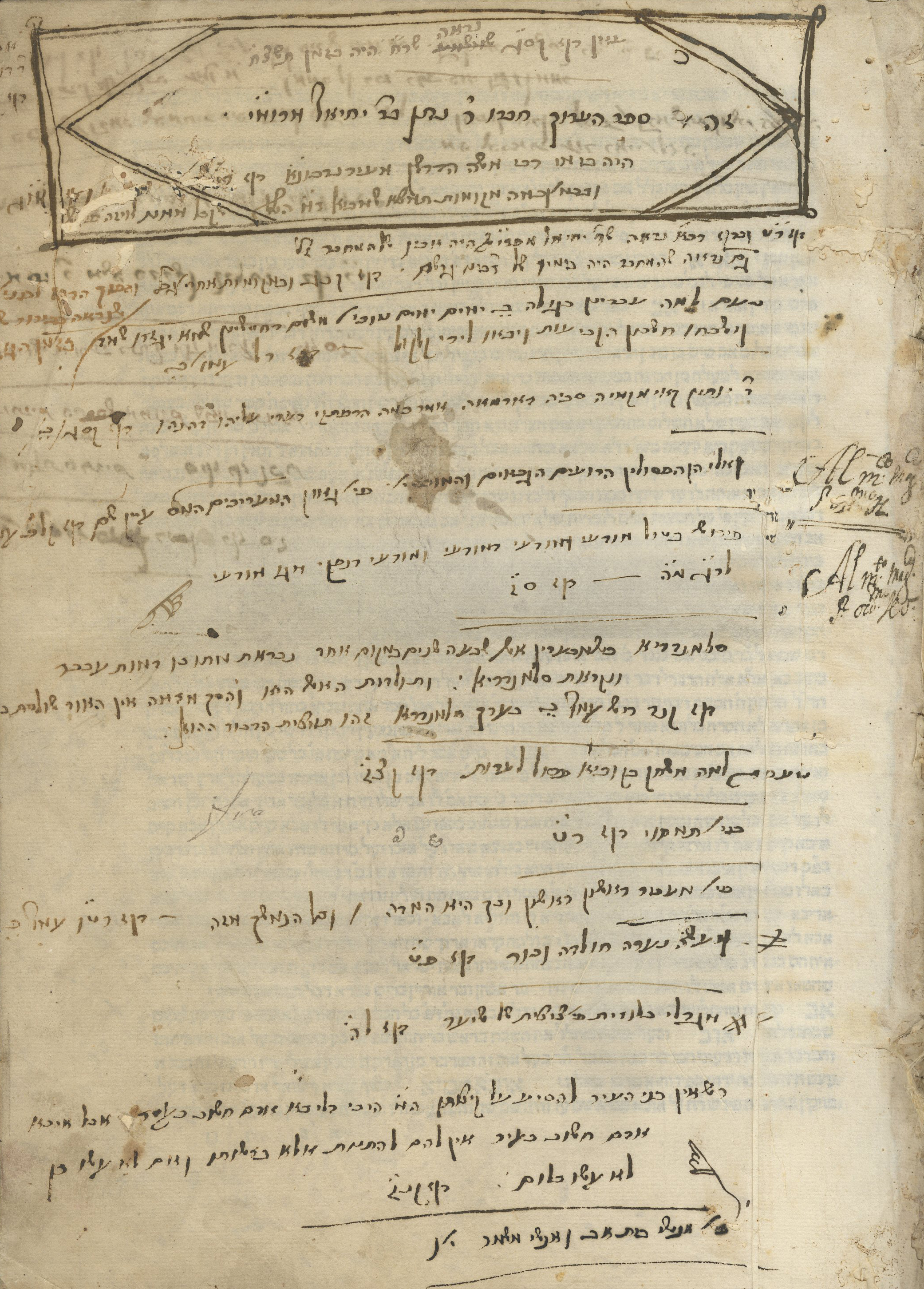
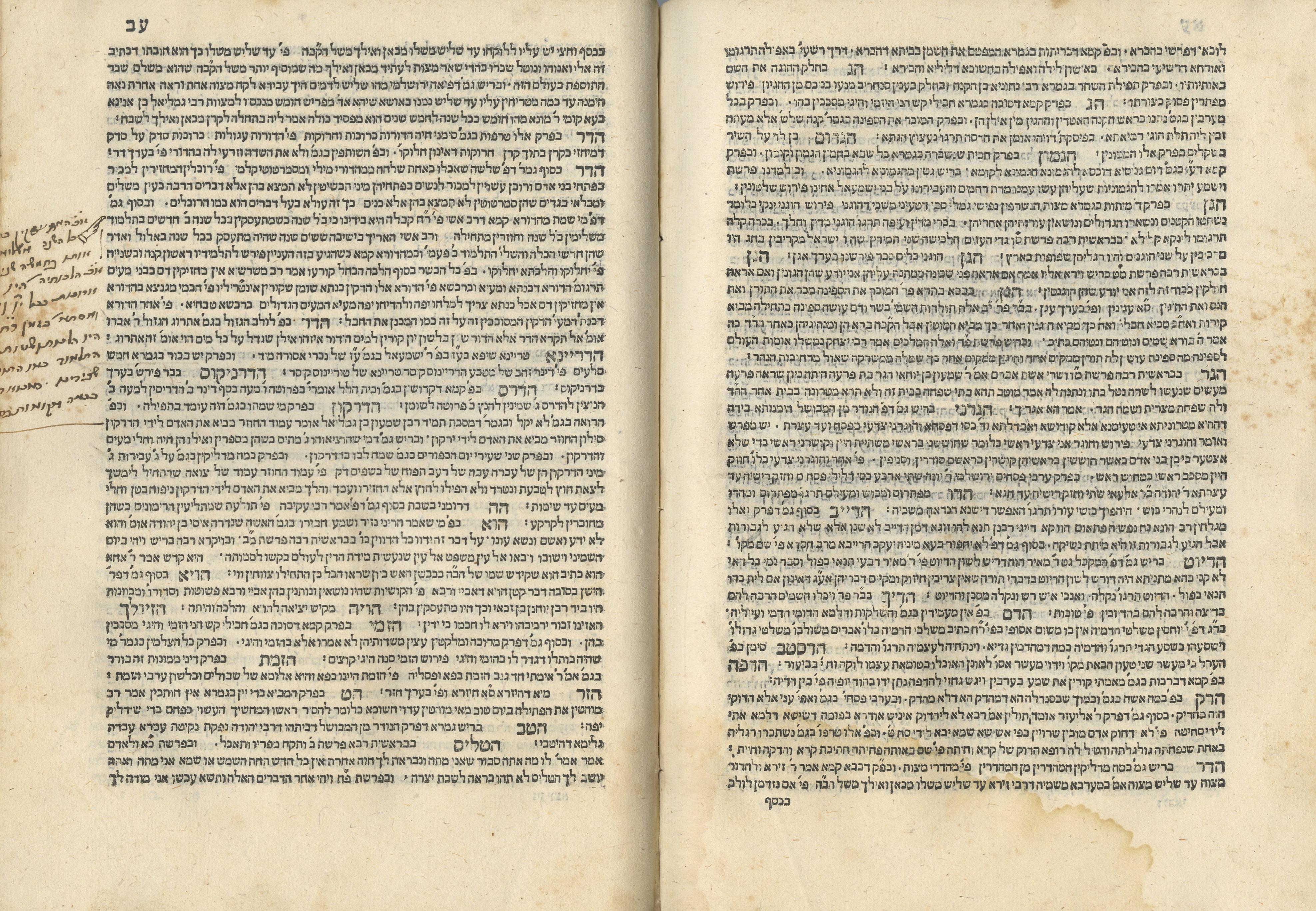
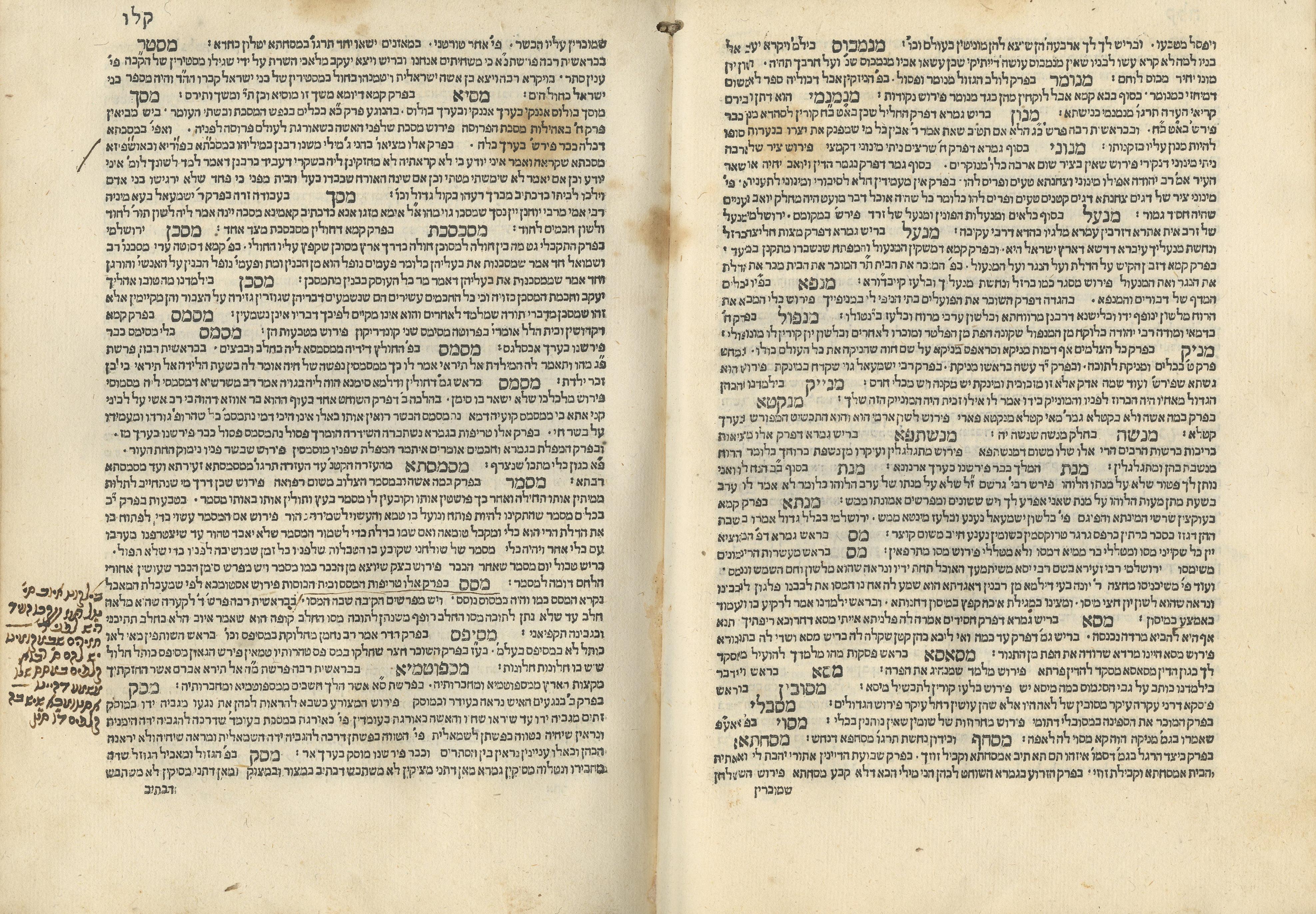
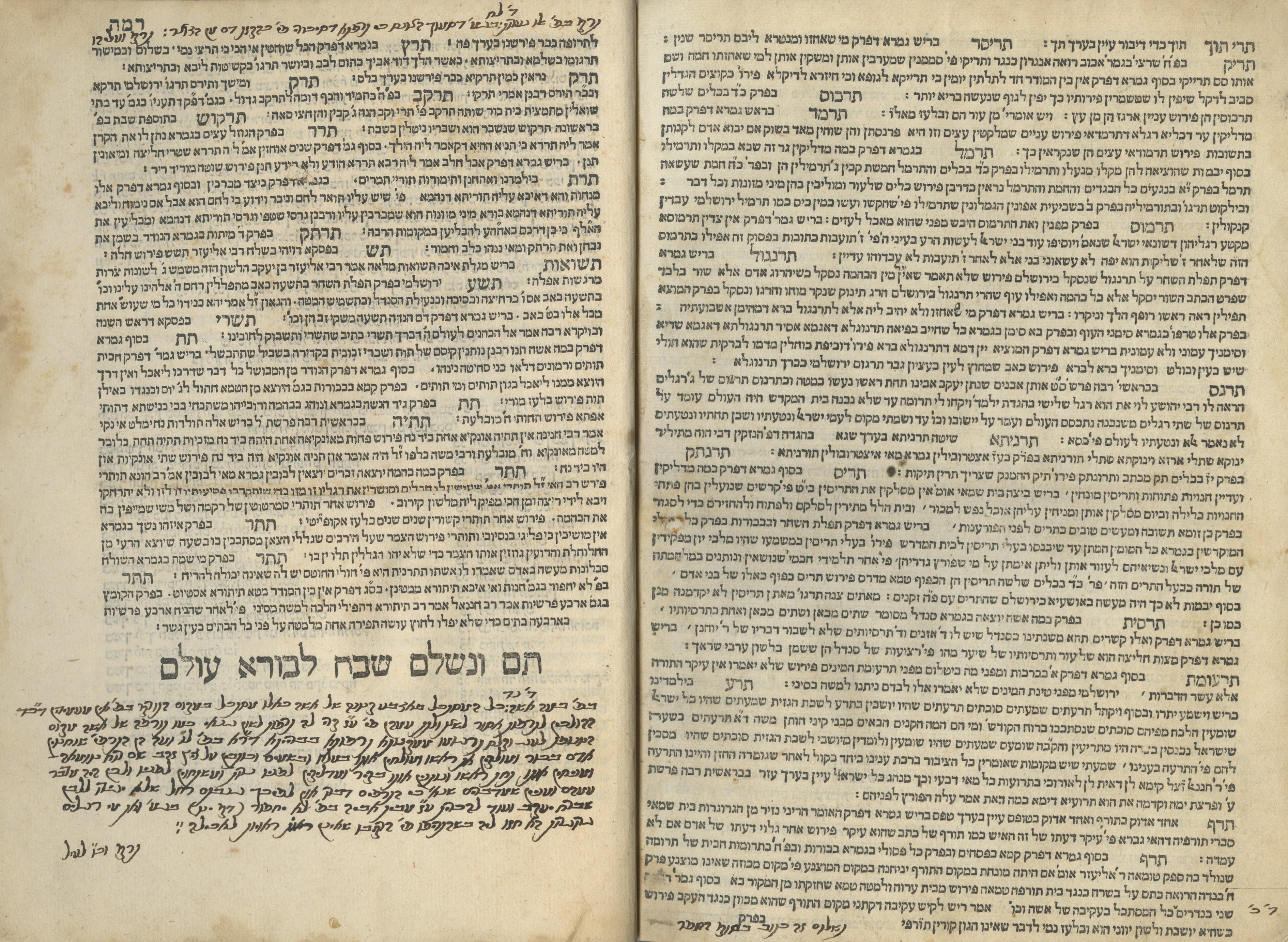
Aruch, Talmudic lexicon by R. Natan of Rome. Venice: Daniel Bomberg, 1531-1532.
Handwritten glosses, by various writers, in early Ashkenazic and in Sephardic script. Inscriptions and emphasis within text.
On endpapers, various inscriptions in Ashkenazic script on the identity of the author of the Aruch, based on various sources, and various references to contents of the book.
On margins of several leaves, glosses handwritten by R. David Uzan, a rabbi and dayan of Tunis at the turn of the 20th century, author of Magen David. At the end of one gloss, he signs with his initials.
Ownership inscriptions in imitation of Ashkenazic script of "R. Rachamim son of the elder and wise R. Saadiah Chai Elha'ik" [the Elha'ik family is a famous family of Tunisian rabbis; R. Rachamim Elha'ik is quoted in Korban Avilechem and his daughter is mentioned in Simchat Kohen].
2-242, 245-246 leaves. Lacking title page and leaves 243-244 (the largely corresponding leaves [176]-177 of Pesaro 1517 edition are bound in their place). 25 cm. Fair-good condition. Stains, including dampstains. Worming to margins. Early leather binding, with wear and defects (worming and open tears to spine).
Provenance: Collection of Mozes Heiman Gans.
Category
Early Printed Books – 16th and 17th Centuries
Catalogue Value


Auction 108 Books | Letters and Manuscripts | Scrolls and Jewish Ceremonial Art
May 12, 2026
Opening: $500
Sold for: $1,250
Including buyer's premium
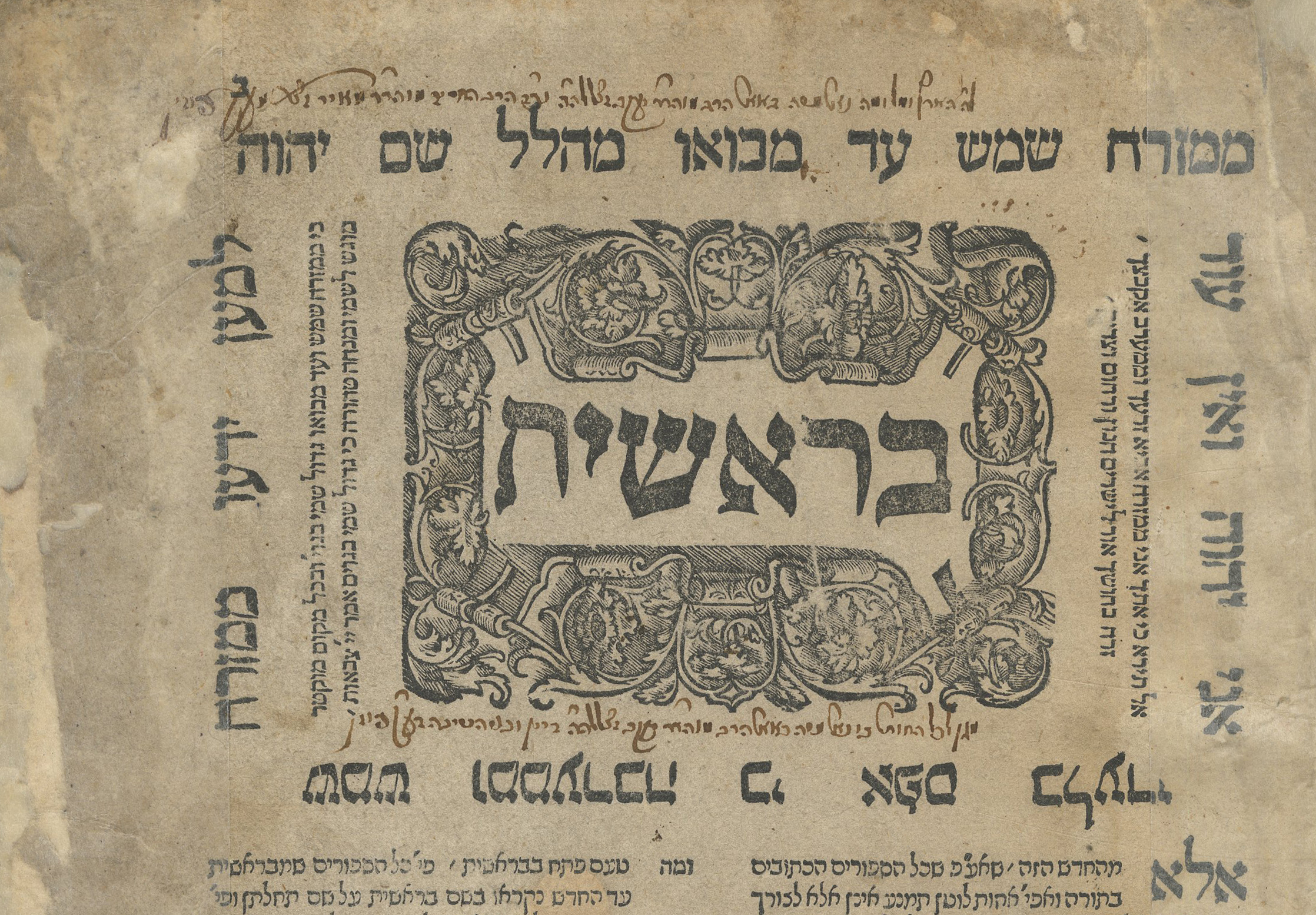
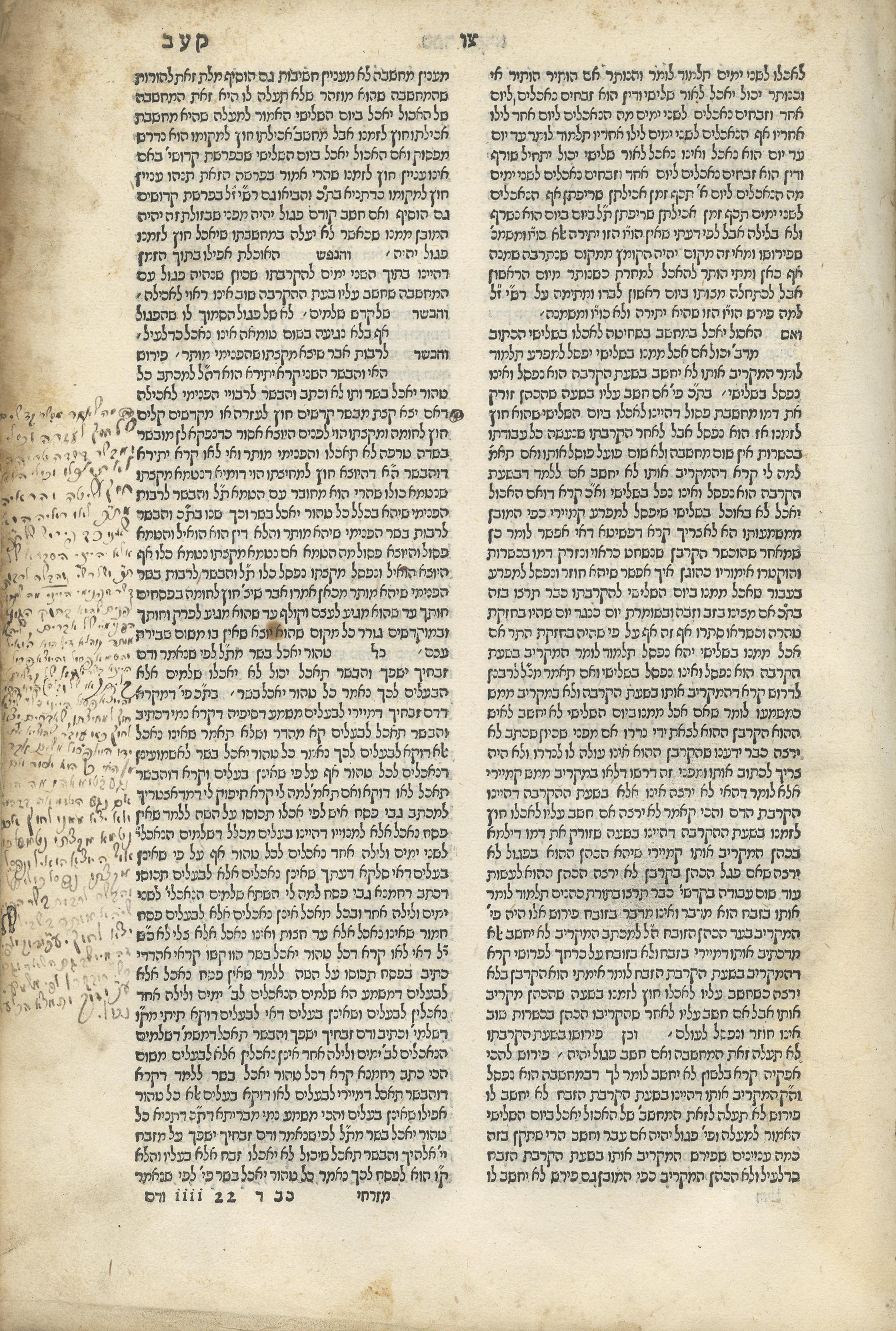
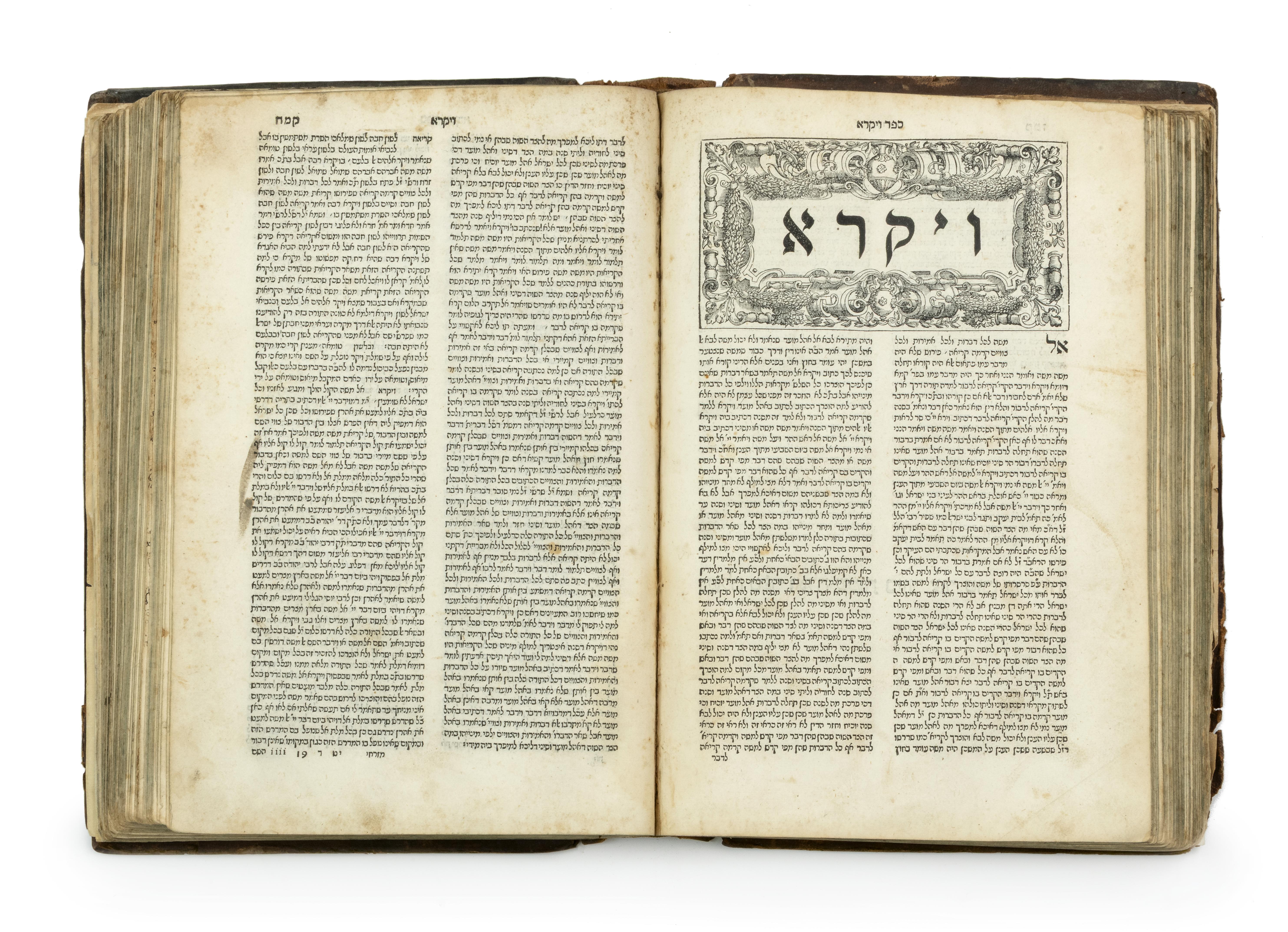
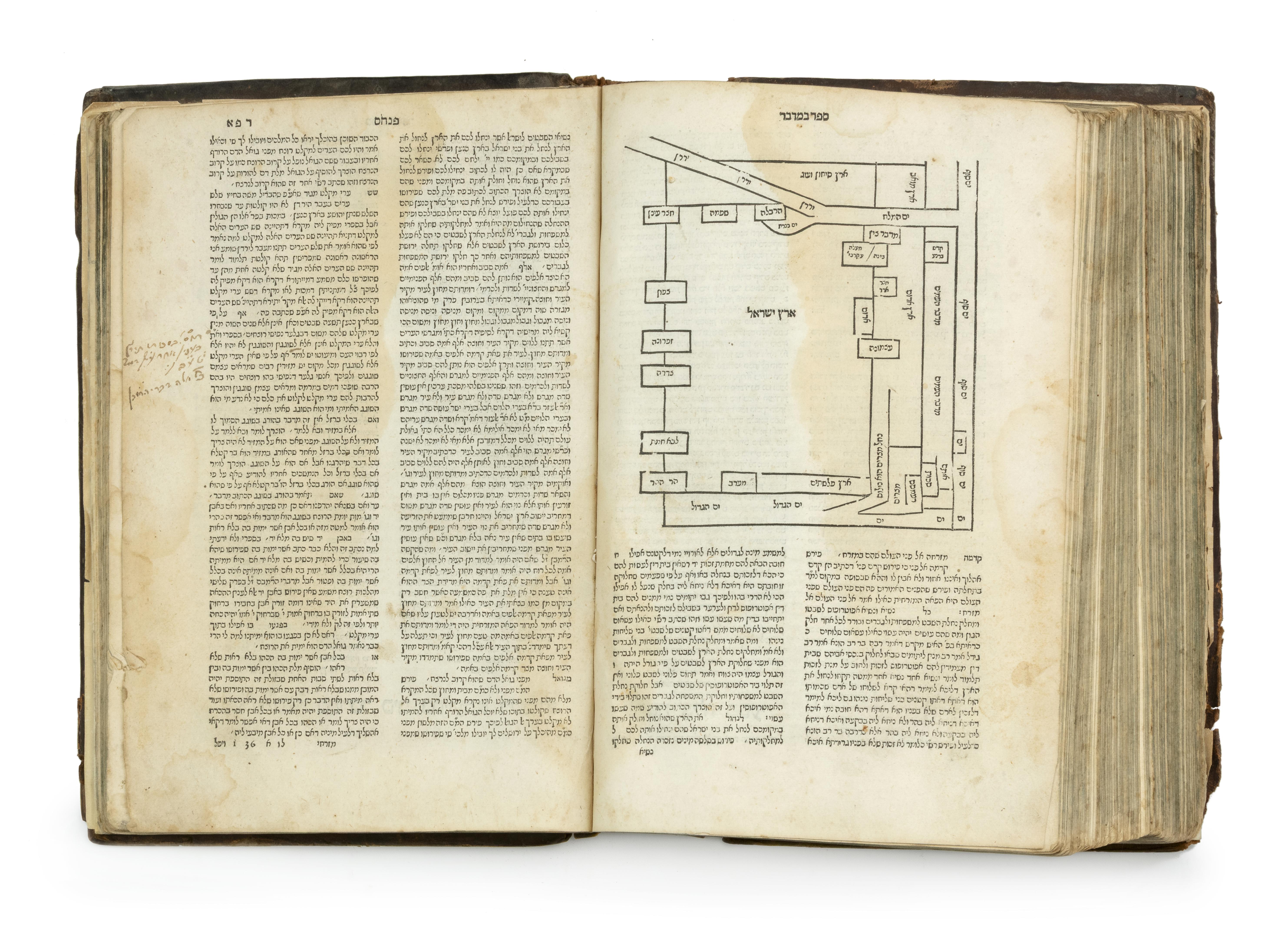
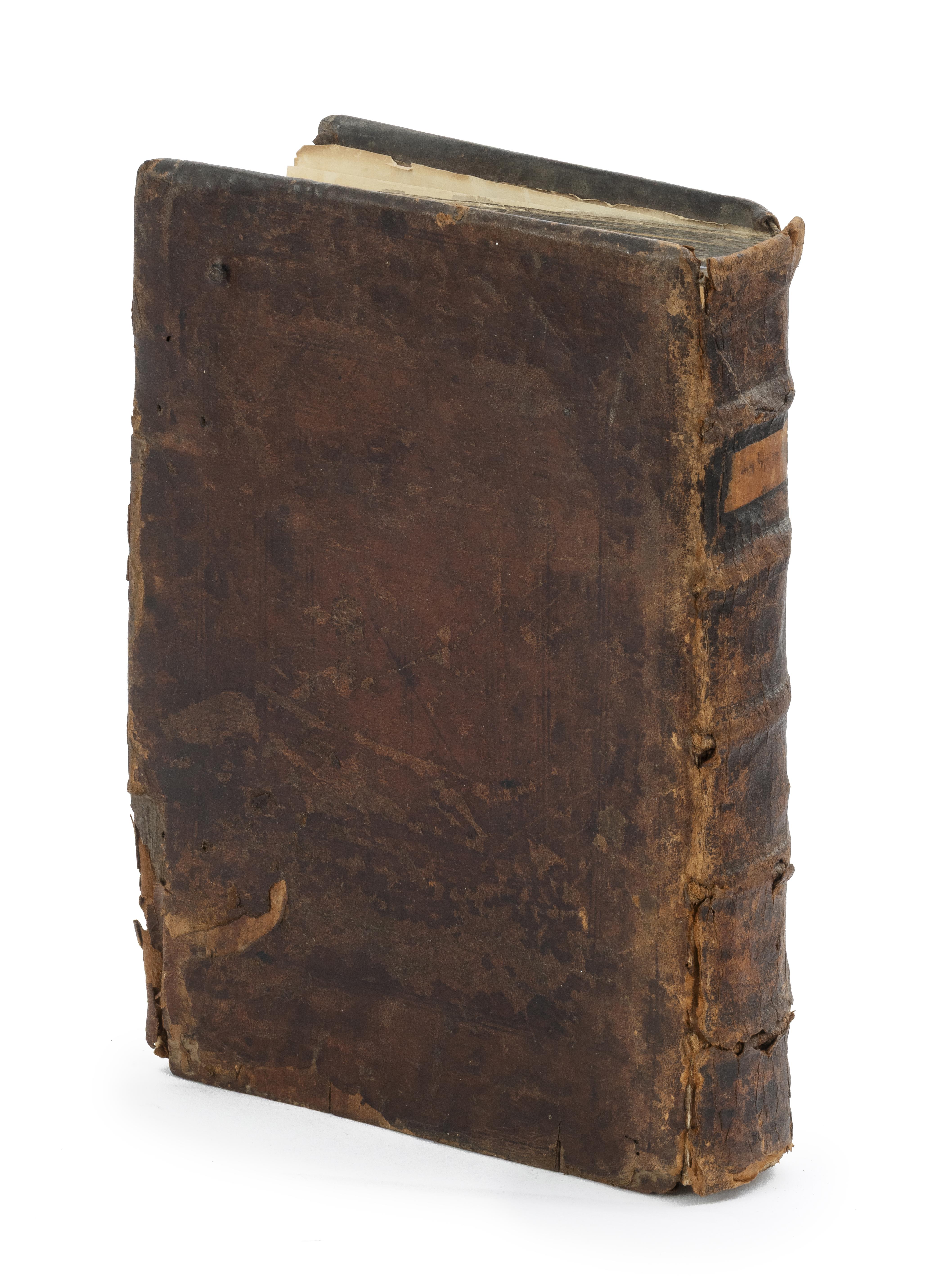
Mizrachi, supercommentary on Rashi on the Torah by R. Eliyahu Mizrachi. Venice: Daniel Bomberg by Cornelio Adelkind, 1545. Second edition.
On p. 280b is a printed map of Eretz Israel.
Colophon on last leaf.
Glosses by various writers (in Ashkenazic cursive script), including a lengthy gloss on p. 172a.
Many ownership inscriptions:
On first leaf, ownership inscriptions of "Moshe son of R. Yaakov, grandson of the pious R. Meir of Posen"; "Moshe son of R. Yaakov, dayan of the Posen yeshiva students" [R. Yaakov son of R. Meir, served as dayan of the Posen yeshiva ca. 1680-1690].
On verso of last leaf, inscription of "Gershon son of R. Shmuel of Poznań, now studying under R. Moshe, dayan in Glogów[?]".
On p. 140a, rhymed ownership inscription in middle of page (between columns) of "Eliezer Lipman son of R. Zerach Shmelkes Shalit [of Prague?]".
On front endpaper, ownership inscription: "This book belongs to the great Gaon… exceptional in his generation… R. Shmuel Katz", and inside the back board: "This belongs to the excellent, exceptional in Torah and piety R. Shmuel".
2-320 leaves. Title page lacking. 30.5 cm. Fair condition. Many stains, including large dark dampstains. Wear. Tears and open tears, mainly to first and last leaves, affecting text, repaired with large strips of tape. Early wood and leather binding, with wear and defects.
Bookplate of Mozes Heiman Gans.
Category
Early Printed Books – 16th and 17th Centuries
Catalogue Value


Auction 108 Books | Letters and Manuscripts | Scrolls and Jewish Ceremonial Art
May 12, 2026
Opening: $500
Sold for: $813
Including buyer's premium
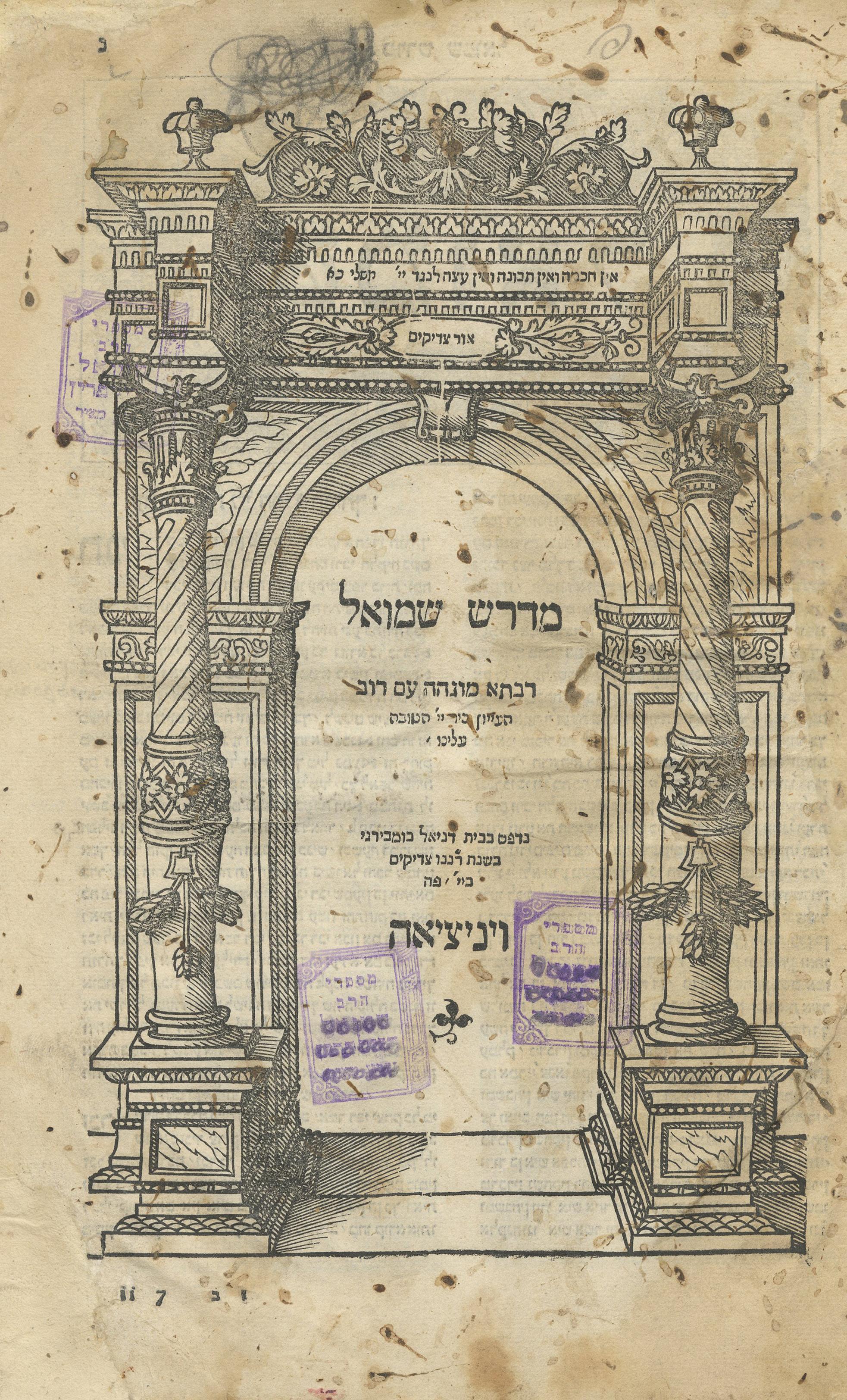
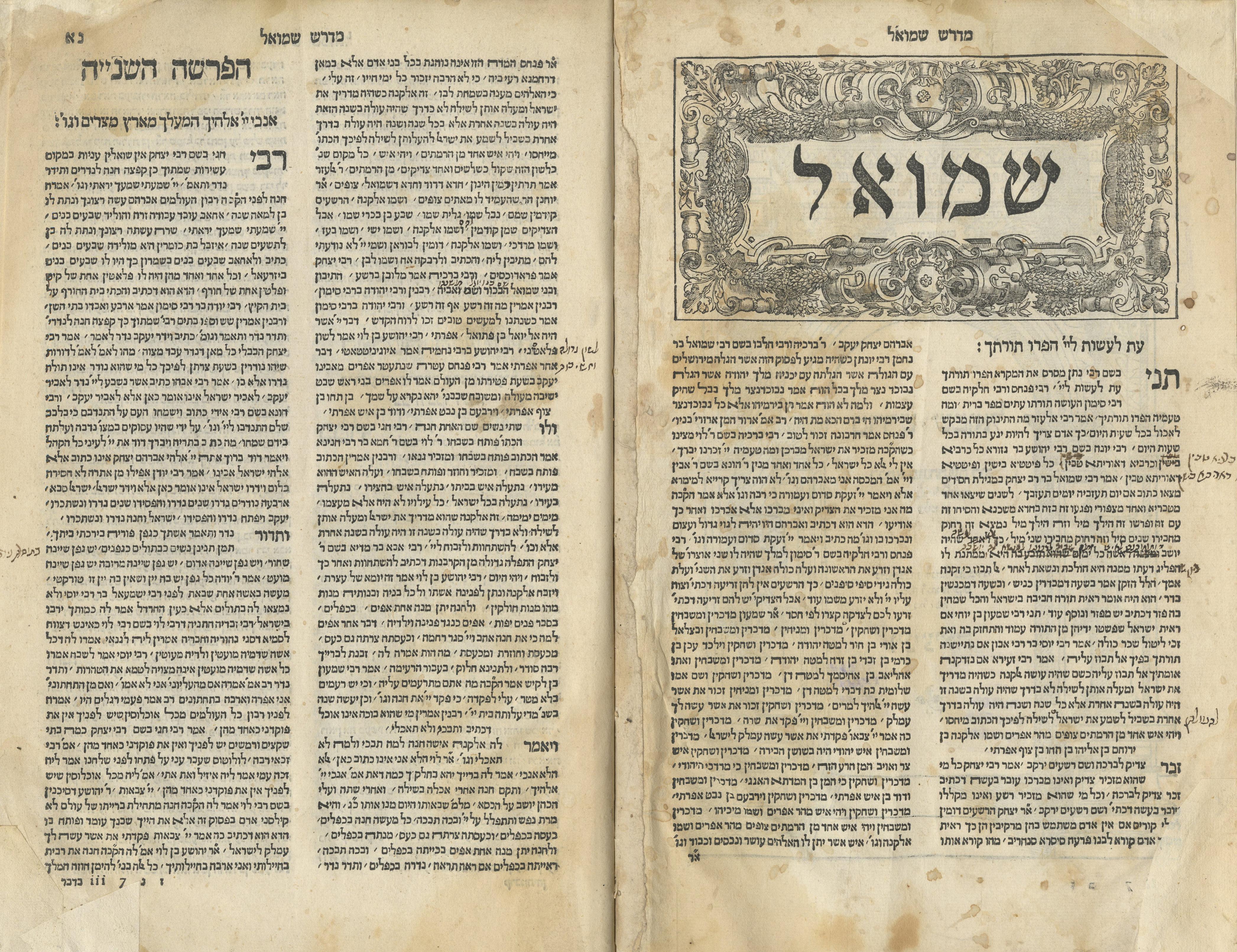
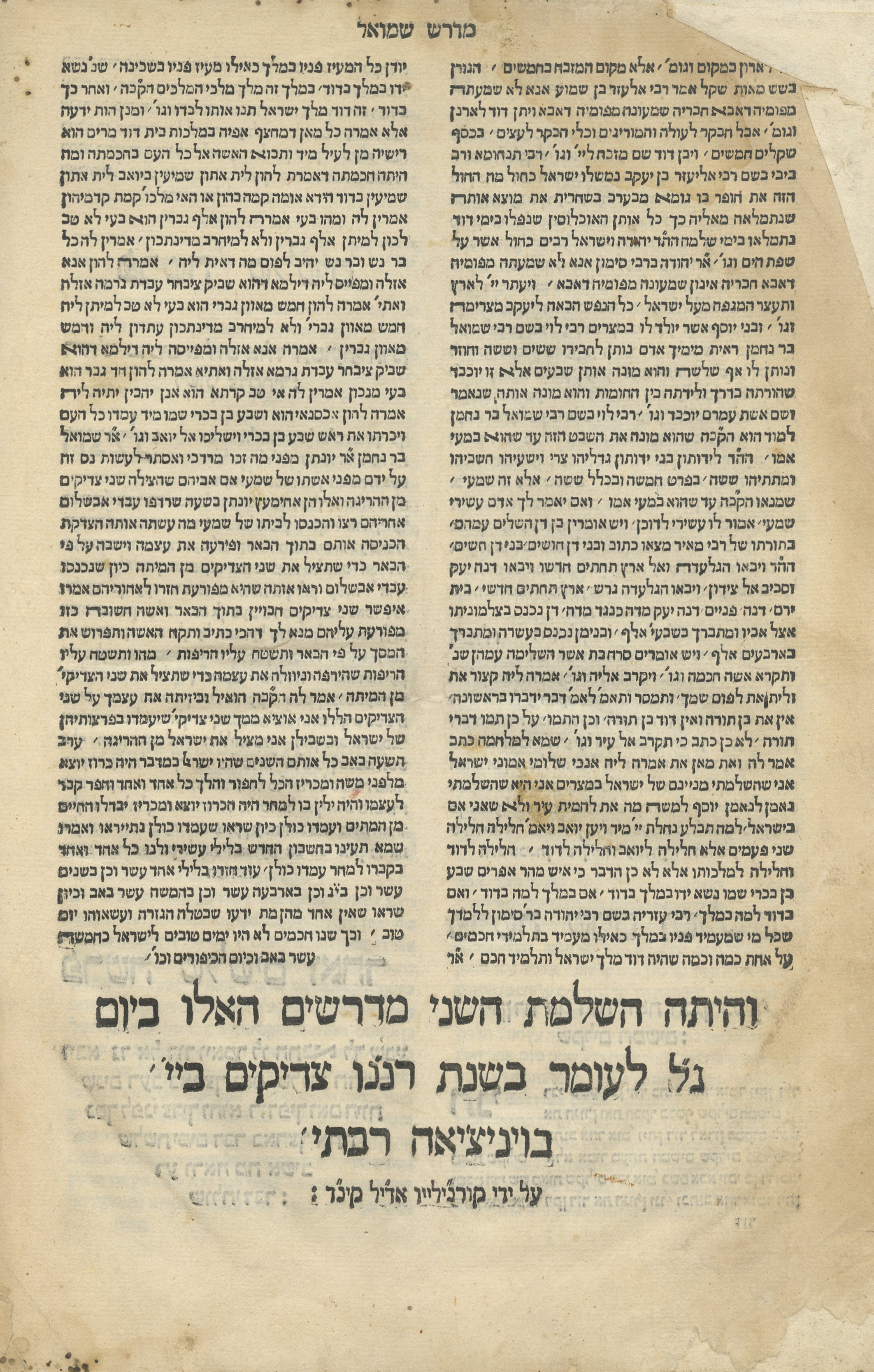
Midrash Shmuel Rabbata. Venice: Cornelio Adelkind for Daniel Bomberg, 1546.
Second edition of Midrash Shmuel. In the complete edition, two other midrashim are included: Midrash Tehillim and Midrash Mishlei, all three later named Shocher Tov (after the opening verse of Midrash Tehillim).
Colophon on last leaf, dated Iyar 1546.
Handwritten glosses, in Sephardic script, in margins and within text on several leaves.
Ownership stamps (some deleted) of "R. Shmuel Heilprin – Zichron Meir". R. Shmuel Heilprin (1876-1958), a senior Chortkov Chassid and rabbi. Head of Beit Din of Machazikei HaDat, Amsterdam and first rabbi of the Zichron Meir neighborhood in Bnei Brak – established by his brother, philanthropist R. Yaakov Heilprin.
50-62 leaves. Approx. 29 cm. Fair condition. Stains, including dampstains, and many inkstains to title page. Wear. Tears, including open tears to title page and other leaves, repaired with paper (over small portions of text in a few places). Many stamps on title page, deleted with ink. Old binding.
Originally printed along with Midrash Tehillim Rabbata and Midrash Mishlei, in continuous foliation but with a divisional title page.
Category
Early Printed Books – 16th and 17th Centuries
Catalogue Value


Auction 108 Books | Letters and Manuscripts | Scrolls and Jewish Ceremonial Art
May 12, 2026
Opening: $500
Sold for: $1,625
Including buyer's premium
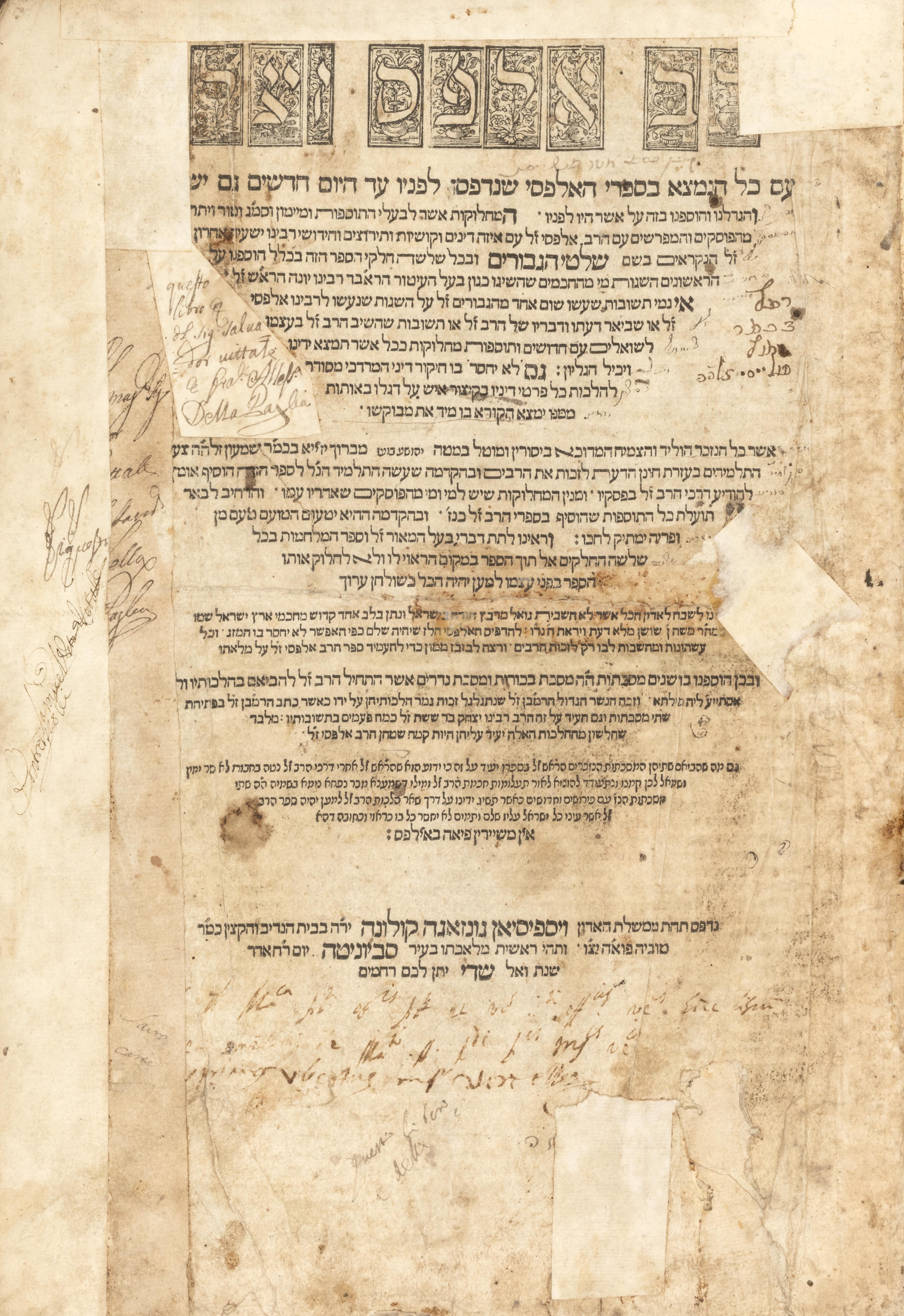
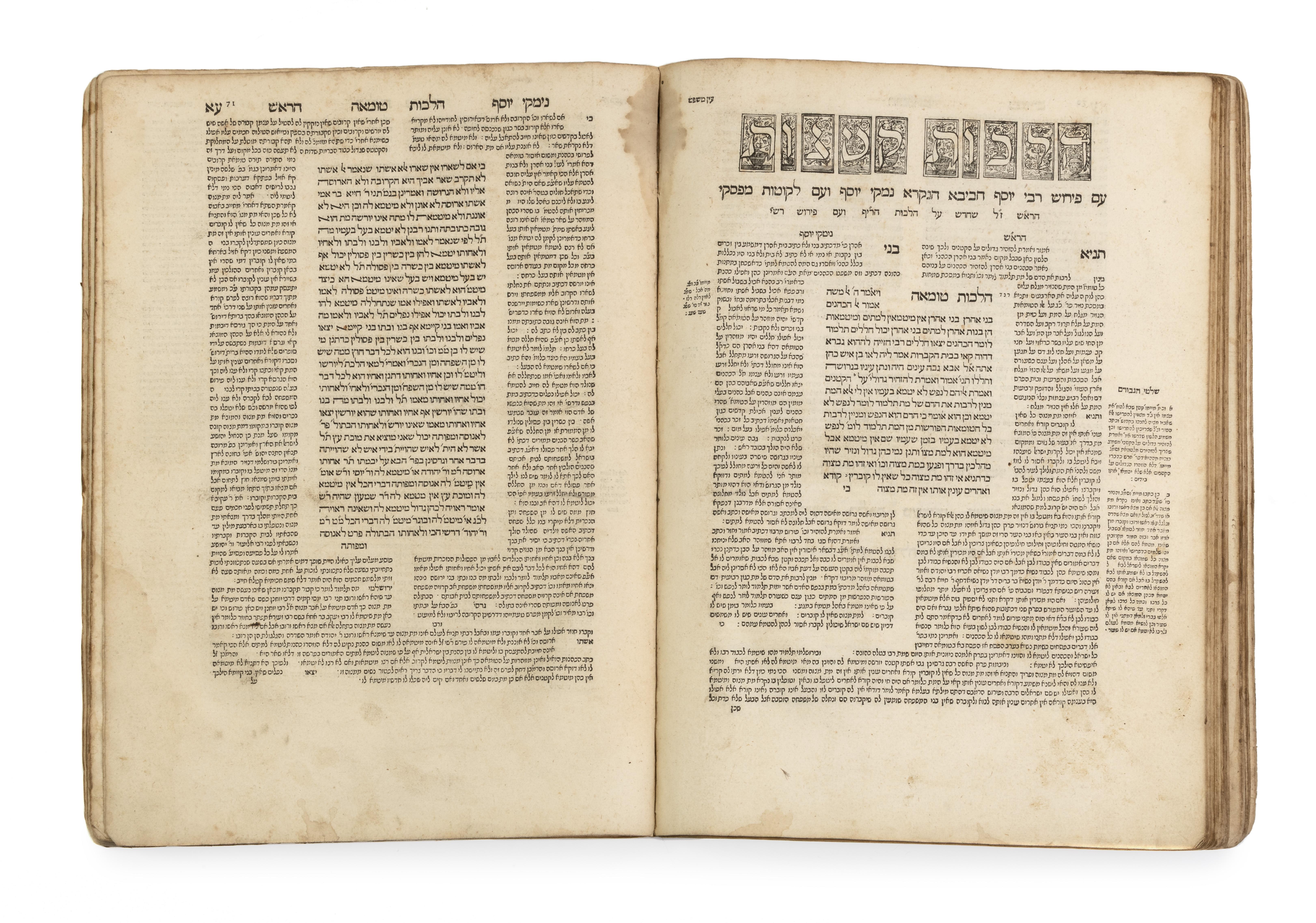
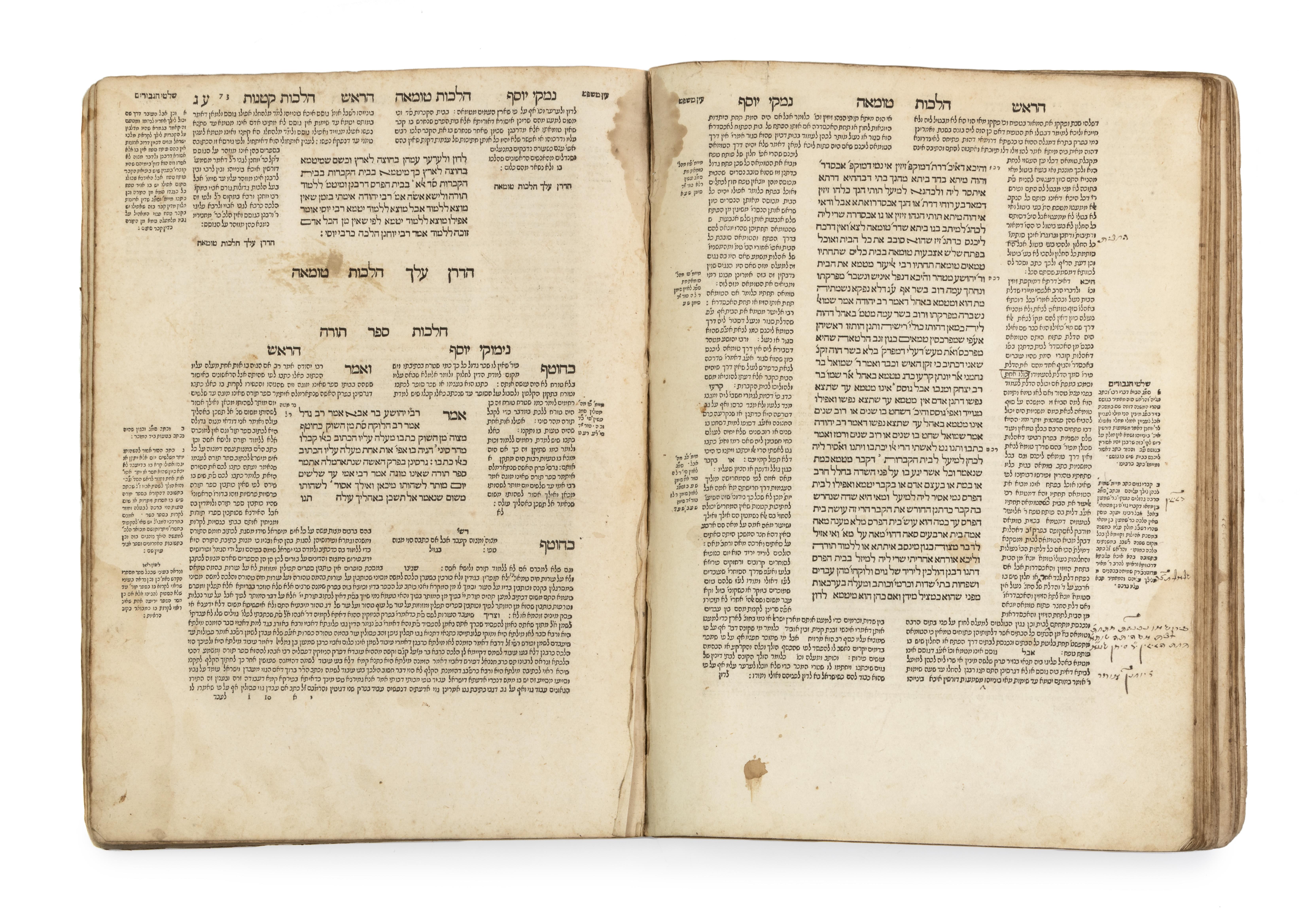
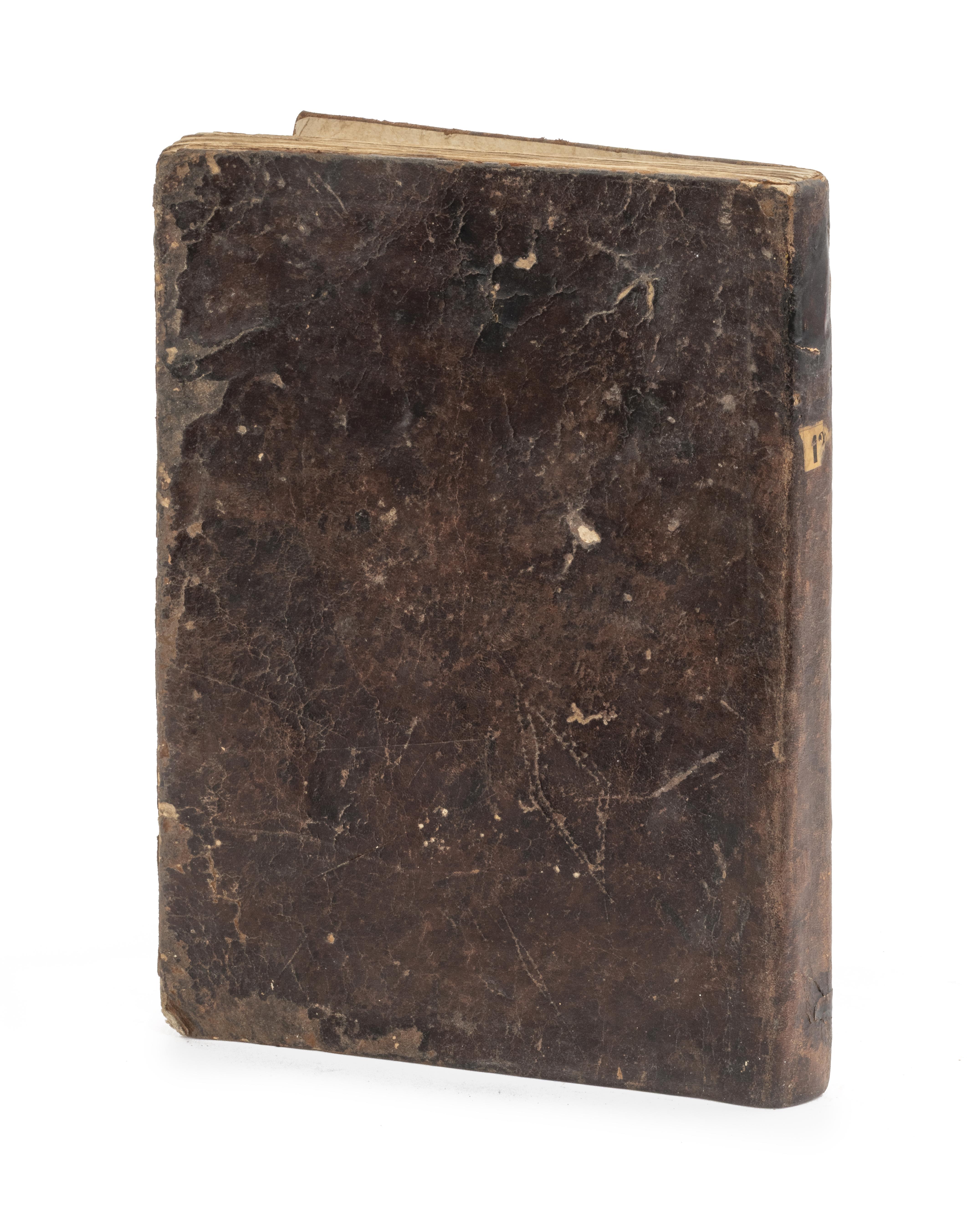
Hilchot Rav Alfas by R. Yitzchak Alfasi (Rif), Part I, Tractate Berachot and Halachot Ketanot, with commentaries of Rabbeinu Yonah, Rabbeinu Nissim, Nimukei Yosef, Baal HaMaor and Ramban, Rosh [on Halachot Ketanot] and Shiltei HaGiborim, with Tosefta and Mordechai. Sabbioneta: Tobias Foa, 1554.
Tractate Berachot and Halachot Ketanot, from Part I (originally included Seder Moed as well).
Censorship expurgations.
Inscription and signature of censors Vincentius de Matelica and Cipriano Uberti on title page.
Ownership inscription on title page: "Purchased by me, Asher Pugliese"; on title page, signature of "Refael son of R. Shmuel Pugliese", and his ownership inscription on endpaper: "Purchased by me… Refael son of R. Shmuel Pugliese" [the Pugliese family were Italian philanthropists and Torah scholars, residing in Piedmont and Vercelli].
Handwritten glosses, in Italian script.
Paper strips mounted on one leaf, over Shiltei HaGiborim commentary, with handwritten replacement of text on paper.
98 leaves. 38 cm. Most leaves in fair condition, approx. 30 of last leaves in good-fair condition. Stains, including dampstains. Wear. Tears and open tears (including several large tears), affecting text, mostly repaired with paper (many large paper strips mounted on title page and some leaves, over some of text). Worming, affecting text. Early leather binding. Worming, wear and defects to binding.
This edition of Rav Alfas was printed during the decrees banning the Talmud in Italy, which began with the burning of the Talmud in Rome on Rosh Hashanah 1553. The decrees forbade the printing and studying of the Talmud, but Rav Alfas was permitted. It became the mainstay of Torah study in Italy during that time period, and was used to reconstruct passages of the (forbidden) Talmud. This edition therefore became one of the most important in its time. (For further information regarding the banning of the Talmud, see: Introduction to Chiddushei R. Moshe Kazes, Machon Yerushalayim, 1988; A. Yaari, The Burning of the Talmud in Italy; M. Benayahu, Hebrew Printing in Cremona, and others).
Bookplate of Mozes Heiman Gans.
Category
Early Printed Books – 16th and 17th Centuries
Catalogue Value


Auction 108 Books | Letters and Manuscripts | Scrolls and Jewish Ceremonial Art
May 12, 2026
Opening: $300
Sold for: $375
Including buyer's premium
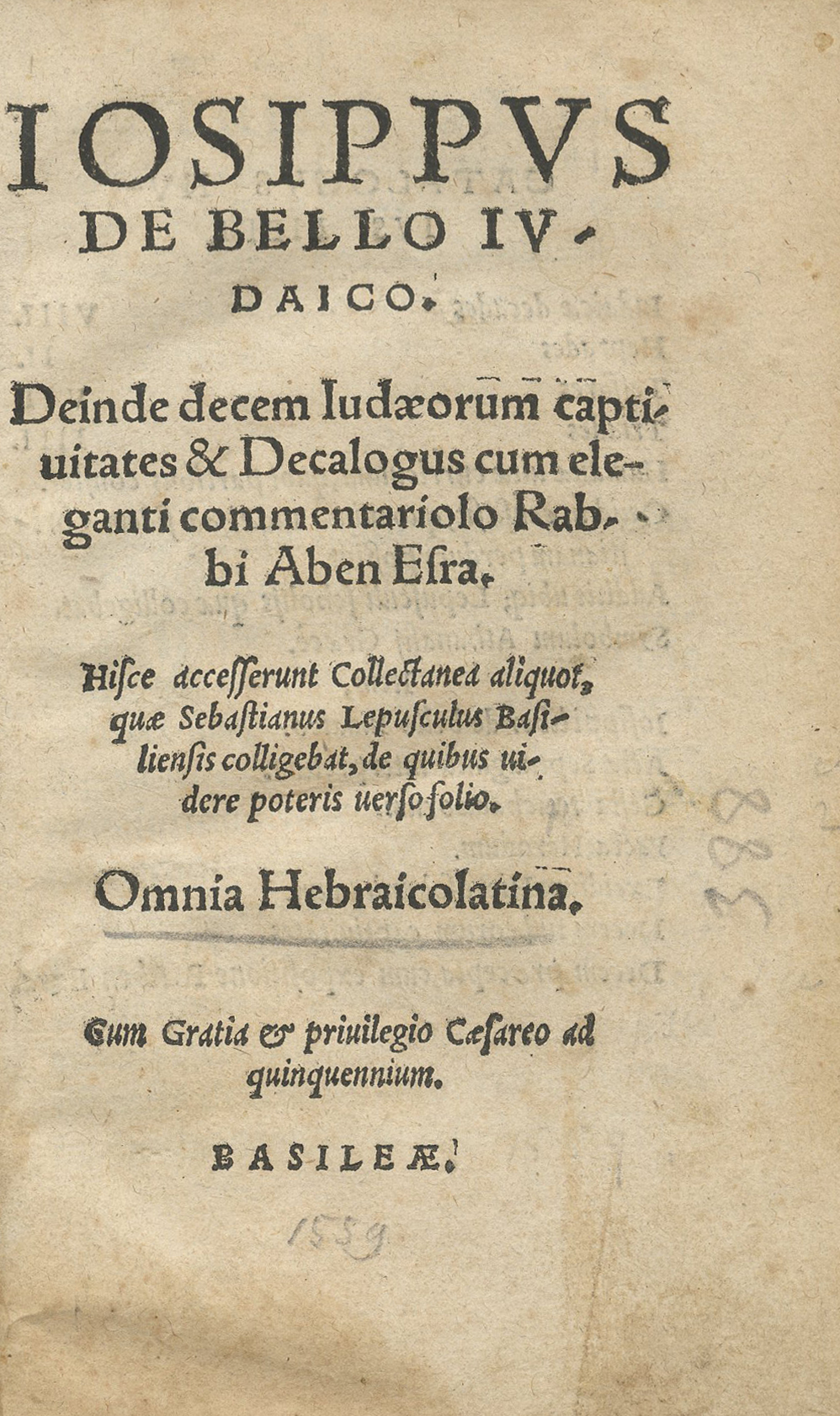
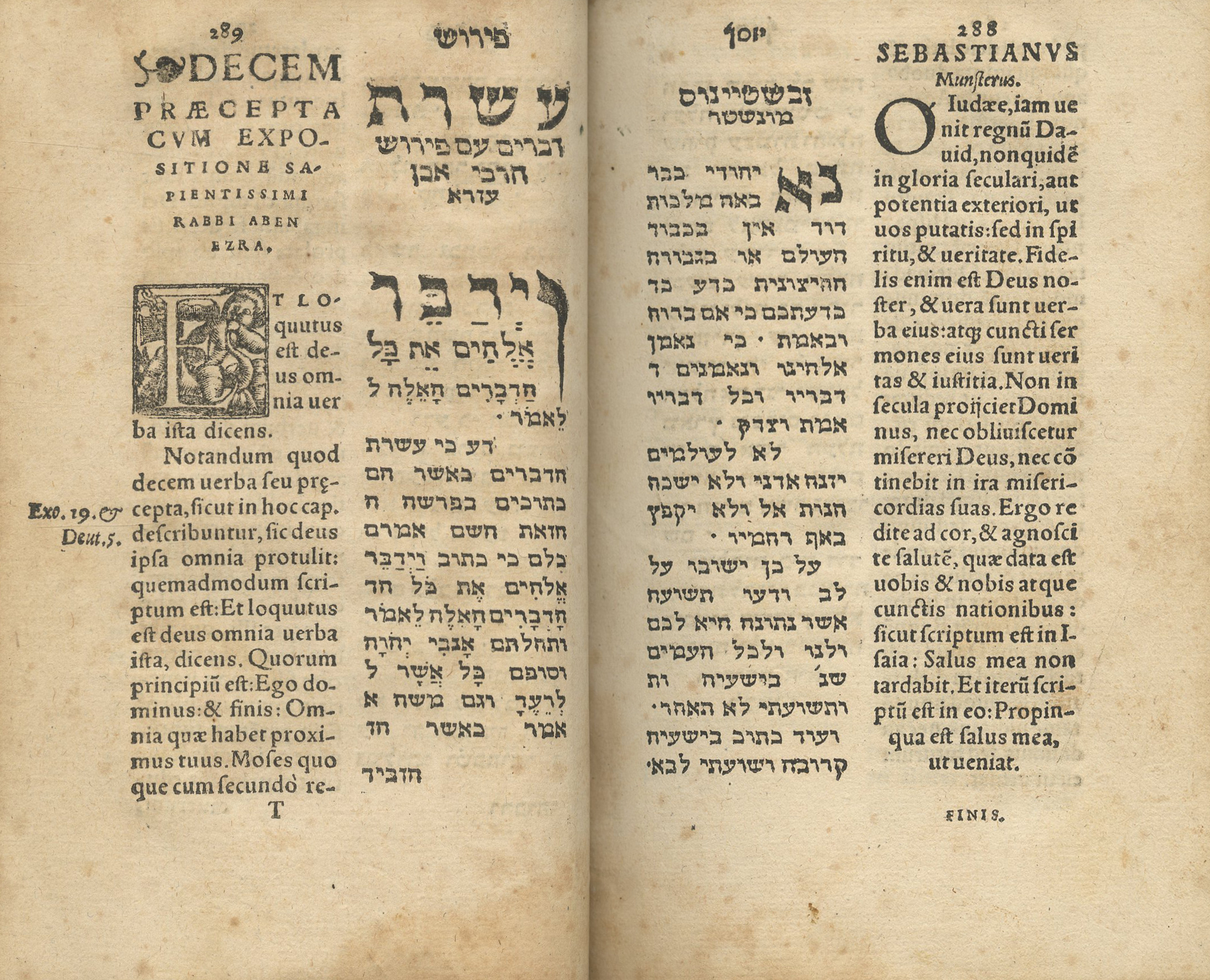
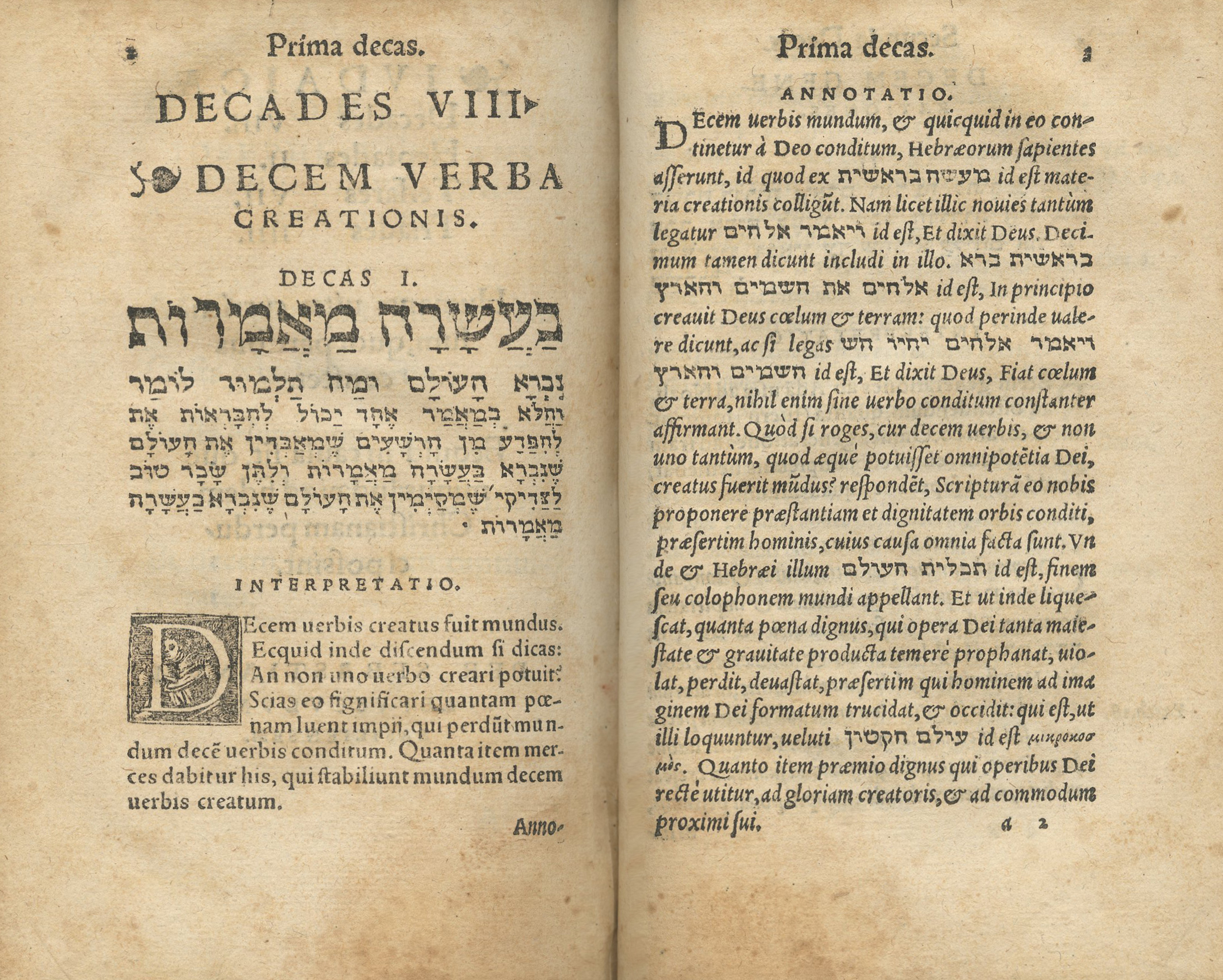
Iosippus, De Bello Iudaico, deinde decem Iudaeorum Captivitates & Decalogus cum eleganti commentariolo Rabbi Aben Esra. Anthology of Hebrew works with Latin translation, edited by Sebastian Lepusculus. Basel: [Henricus Petrus], [1559].
Anthology of several works in Hebrew and Latin. Most of the volume comprises two works attributed to Yosifon although in fact originating in Sefer HaKabbalah by R. Avraham ibn Daud. Both works include a Latin translation by Sebastian Münster. Ten other works are included with a Latin translation, edited by Sebastian Lepusculus.
Some works printed left to right, others printed right to left.
Name of printer on colophon (leaf [1] after p. 342, in middle of volume).
Signature on endpaper: "Franz Praetorius, Berlin, 1869" (Georg Friedrich Franz Praetorius, 1847-1927, well-known German Orientalist).
Inscriptions within text and handwritten glosses on several leaves (in Latin).
23; 342, [1]; 96 pages. 15.5 cm. Good-fair condition. Stains. Marginal tears to several leaves. Original leather binding, with new leather spine and other repairs. Defects to binding.
Category
Early Printed Books – 16th and 17th Centuries
Catalogue Value


Auction 108 Books | Letters and Manuscripts | Scrolls and Jewish Ceremonial Art
May 12, 2026
Opening: $400
Sold for: $1,063
Including buyer's premium
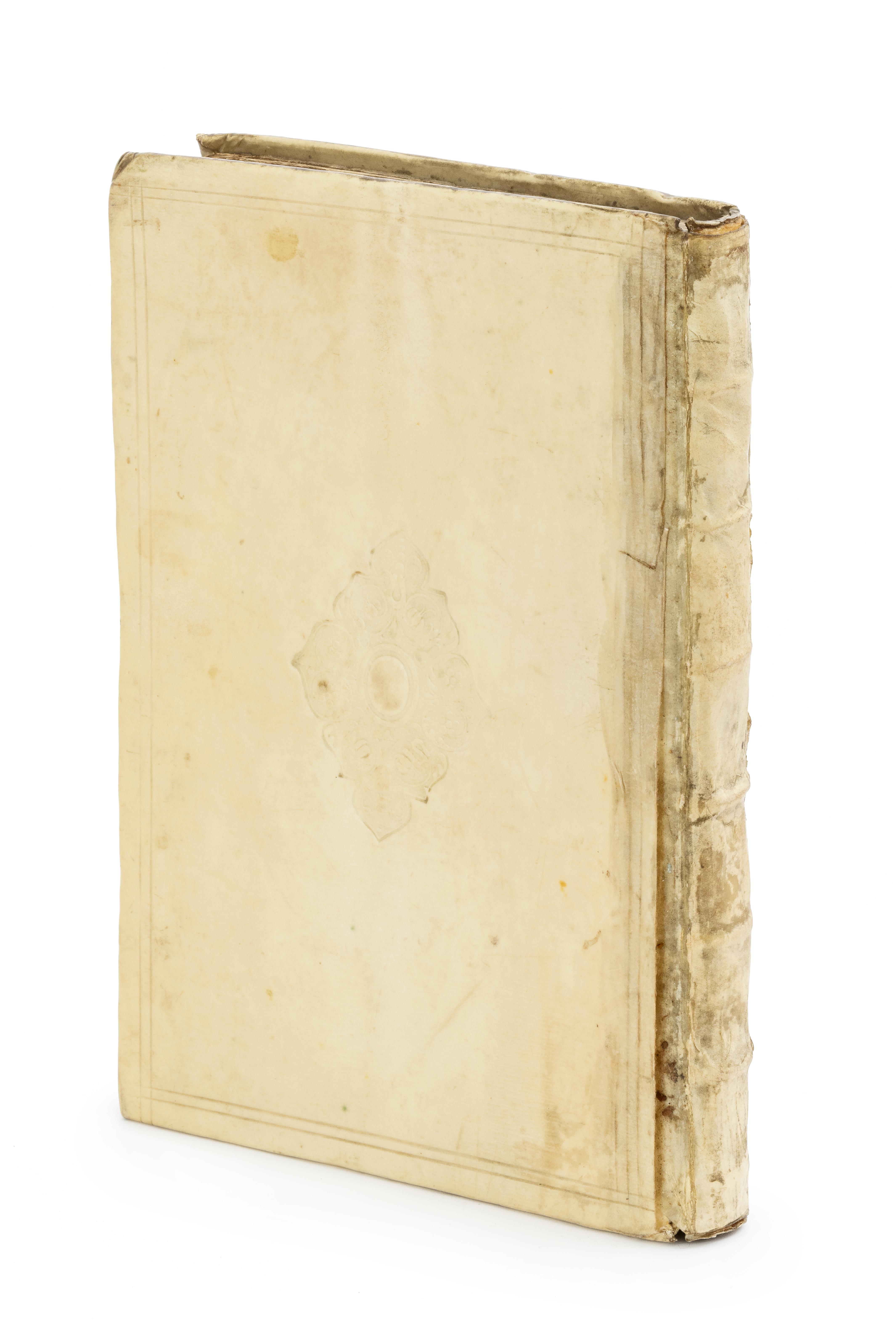
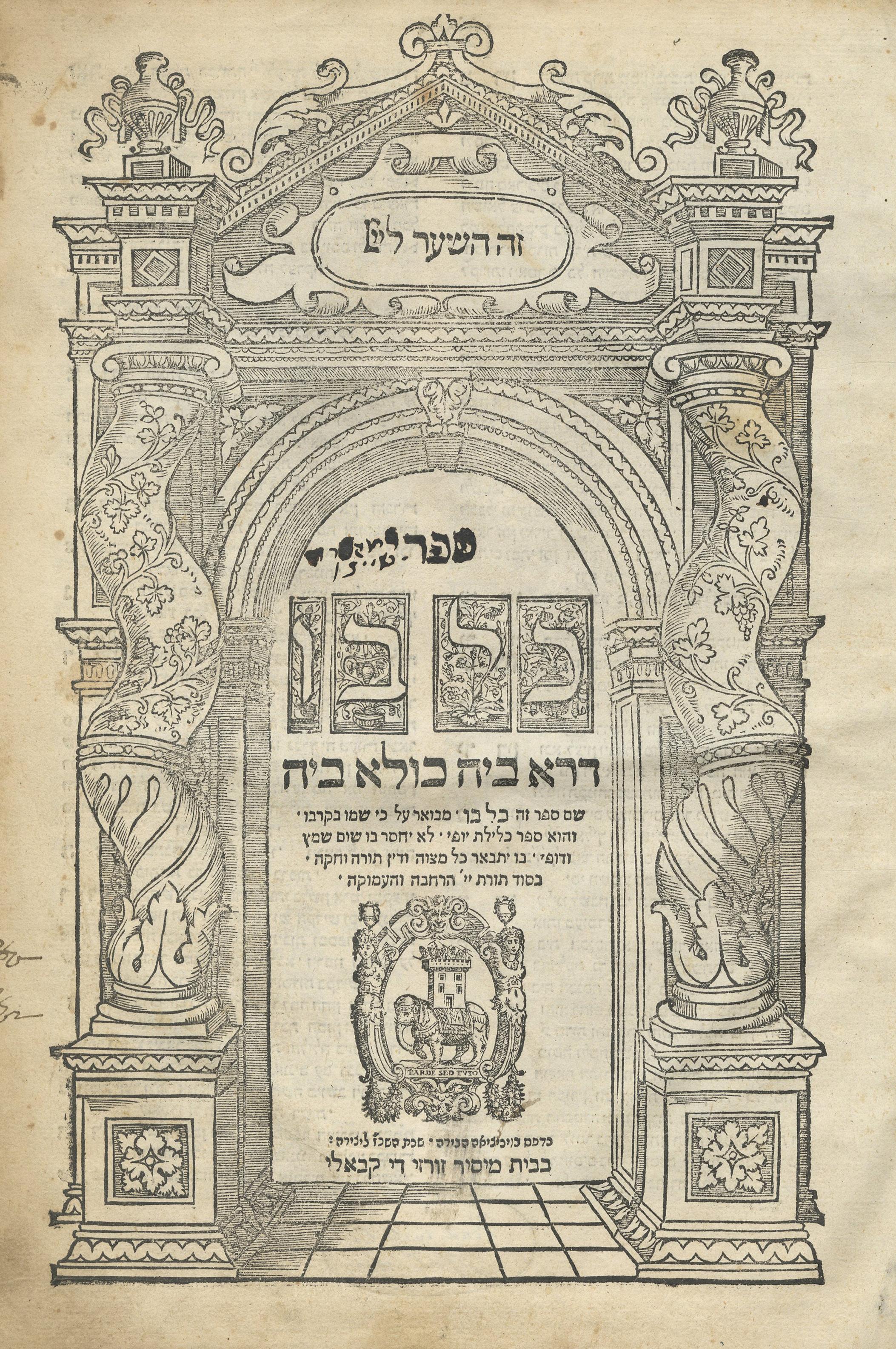
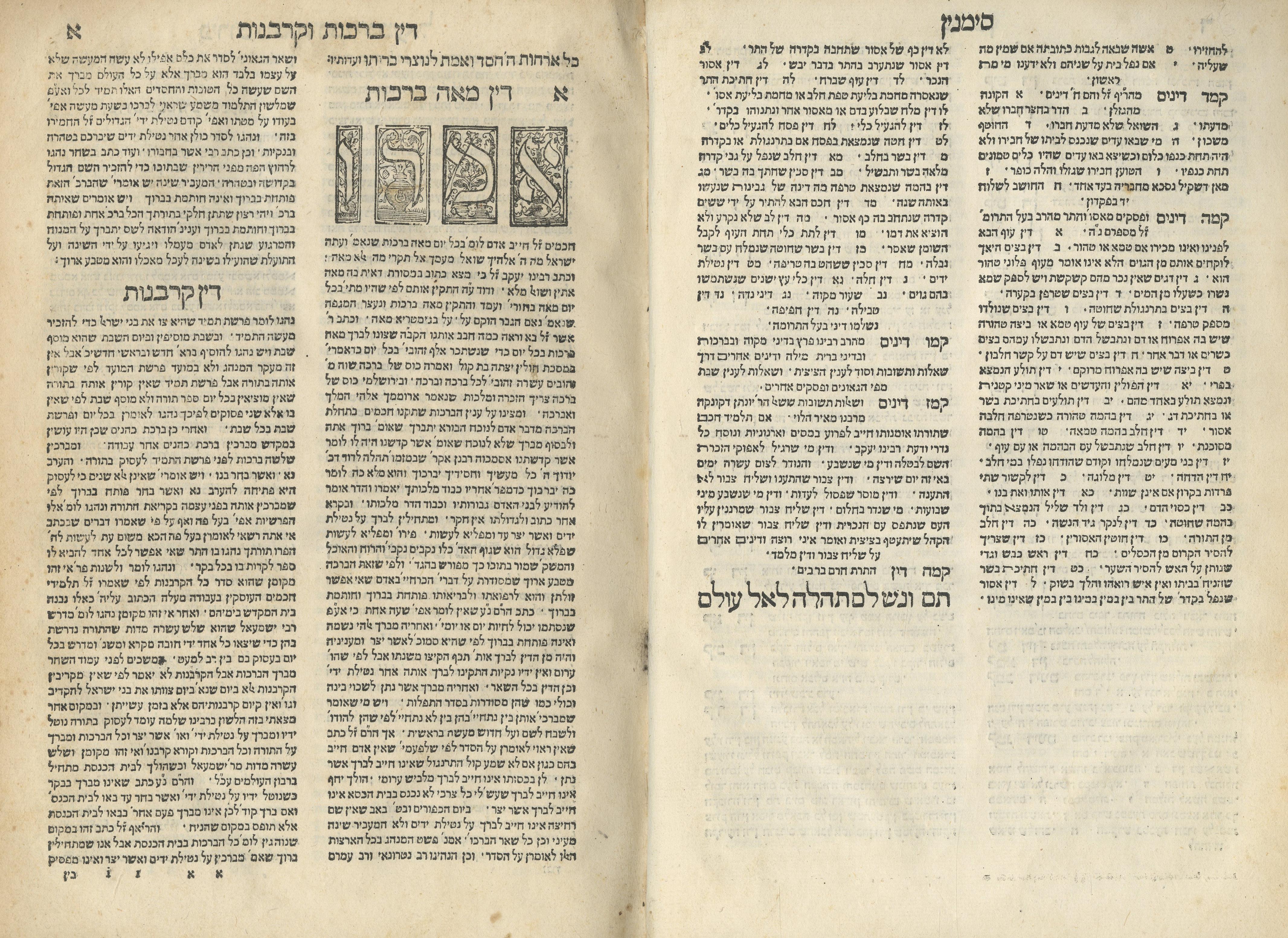
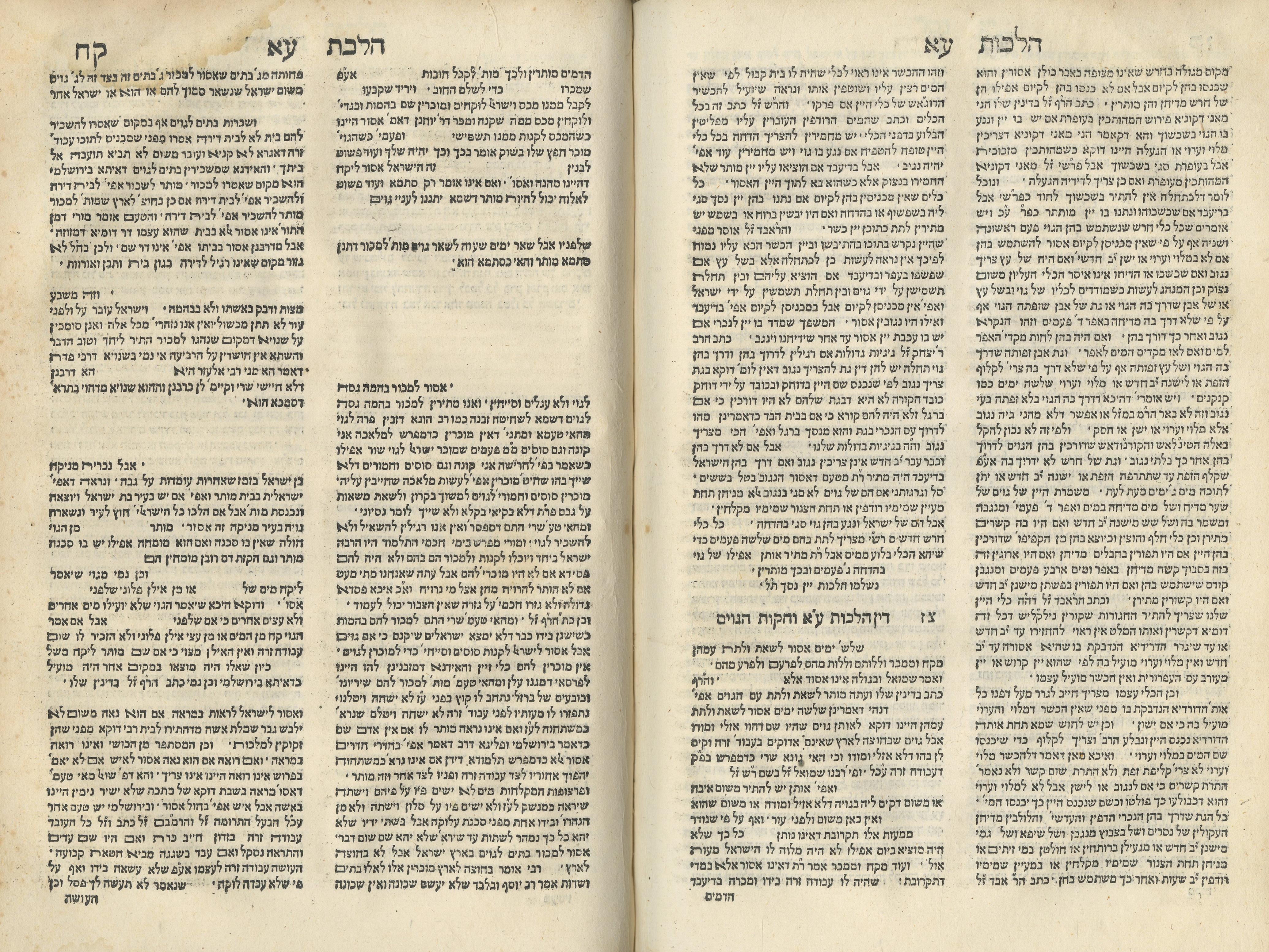
Kol Bo, year-round laws and customs, including kosher laws, monetary laws and more. Venice: Giorgio di Cavalli, 1567.
Printed after Venice 1547 edition. In section 97, due to censorship, several lines and complete paragraphs are left blank.
Kol Bo is an early halachic work, printed anonymously. Over the years, the identity of its author was subject to dispute. Today it is considered an early edition of the work Orchot Chaim by R. Aharon HaKohen.
Handwritten inscription on title page. Stamps on verso and p. 2a.
4; 158 leaves. 28 cm. Overall good condition. Stains, including dampstains. Marginal tears to several leaves. Worming, slightly affecting text. Last leaf partially detached. Stamps. Early parchment binding, with defects (repairs to spine and edges).
Bookplate of Mozes Heiman Gans.
Category
Early Printed Books – 16th and 17th Centuries
Catalogue Value


Auction 108 Books | Letters and Manuscripts | Scrolls and Jewish Ceremonial Art
May 12, 2026
Opening: $1,800
Sold for: $2,500
Including buyer's premium
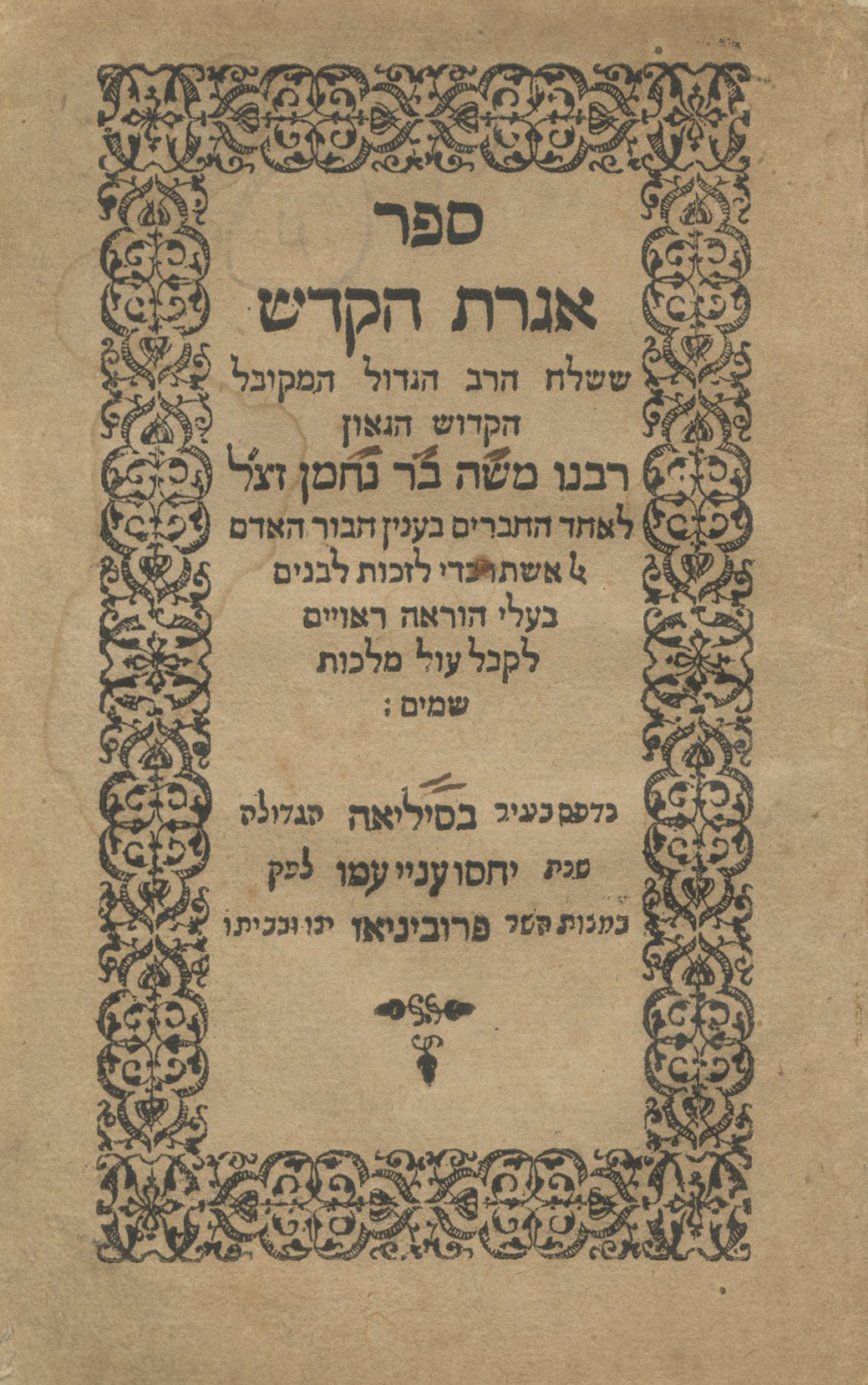
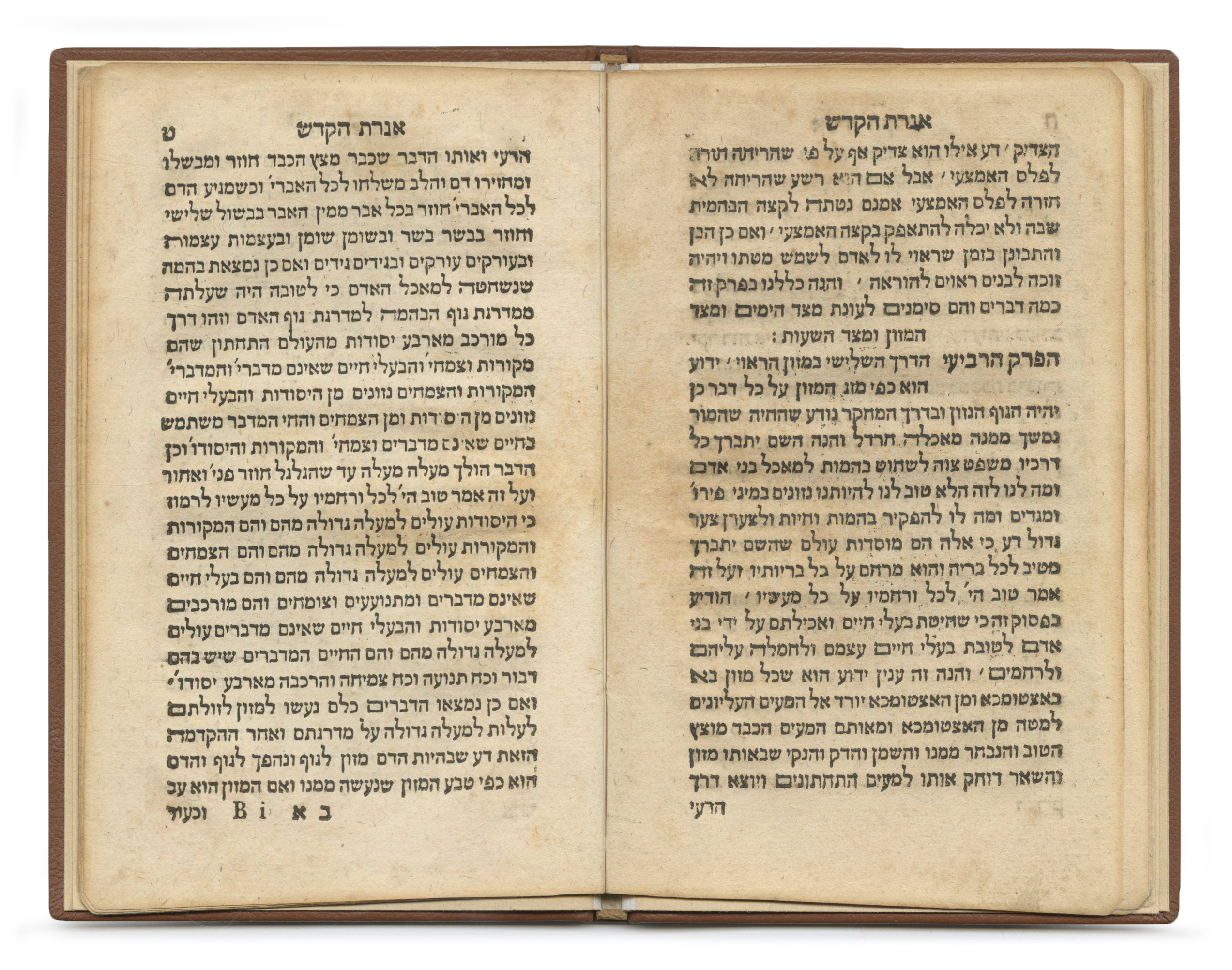
Igeret HaKodesh, on holiness in marital relations, attributed to R. Moshe son of Nachman – the Ramban. Basel: Froben, 1580. Second edition.
15 leaves. 14.5 cm. Title page somewhat dark. Most leaves in good condition. Stains. Small marginal tears to title page, repaired with paper filling. Inscriptions to title page. New leather binding.
Probably misattributed to the Ramban; the true author is unknown.
Rare edition.
Joseph Prijs, Basle, no. 127.
Category
Early Printed Books – 16th and 17th Centuries
Catalogue Value